
Yoshino 吉野 Feza
Launching Soon
This release reflects our continued commitment to quiet, disciplined watchmaking.
Entering the Feza Chapter
An Unspoken Resonance, The Next Expression
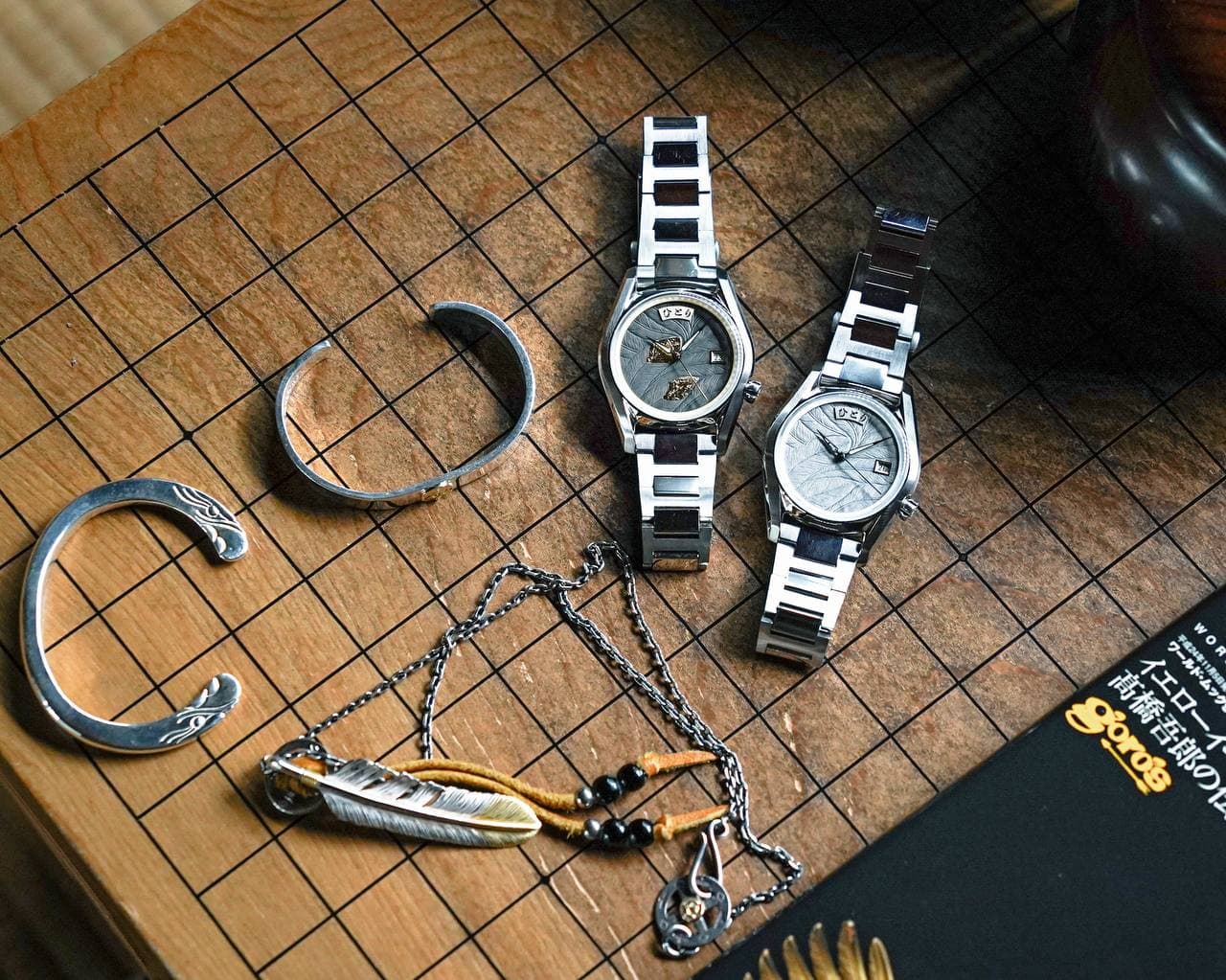
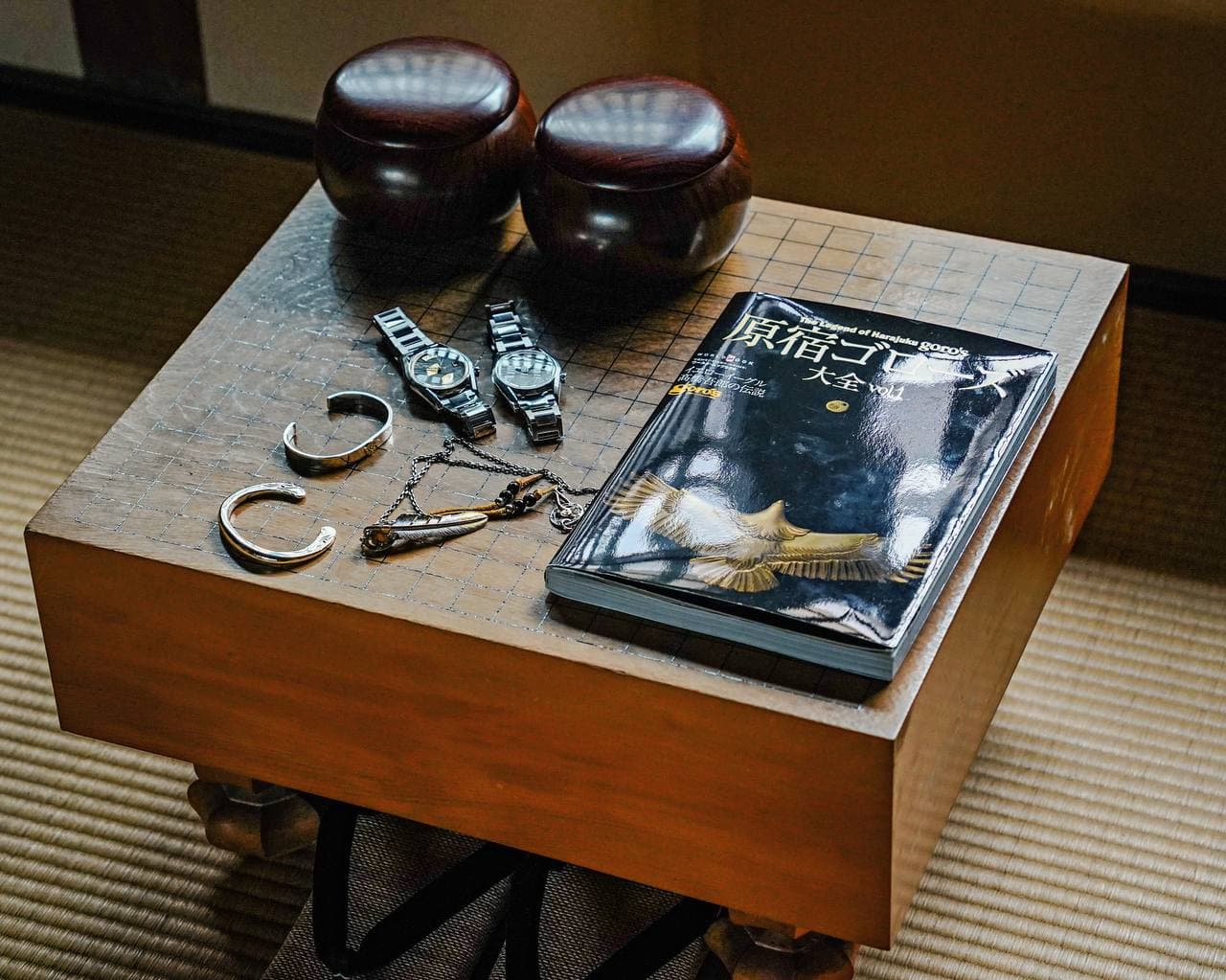
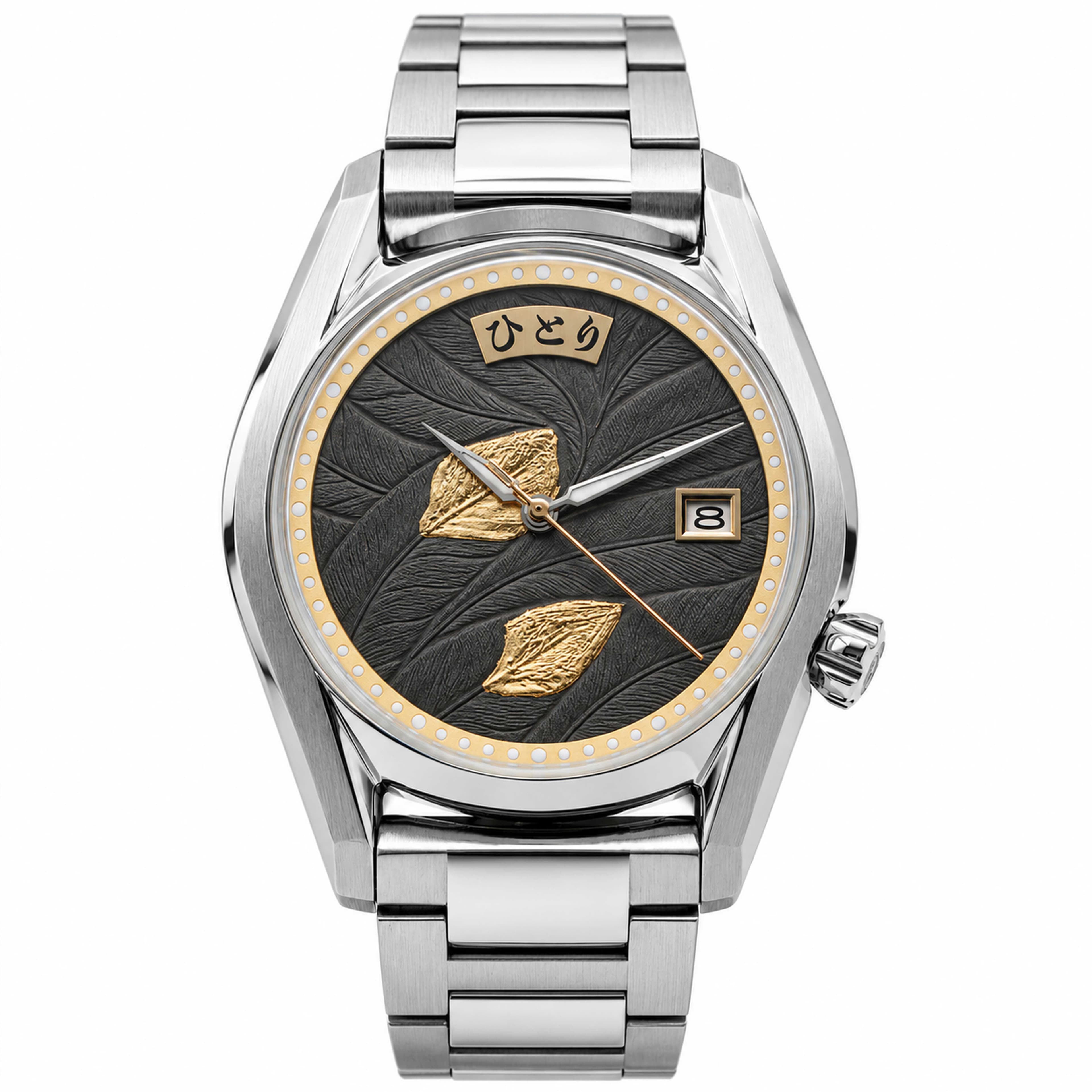
There are certain things outside of watches that Hitori has quietly adored for many years, and handcrafted silverwork is one of them. There is something rather beautiful about the way a craftsman can bring character out of an otherwise simple surface. Fine engravings catch the light, deeper cuts fall into shadow, small irregularities remain from the hand, and over time the object slowly develops a character belonging entirely to the person carrying it. Among these works, the feather has always been a form Hitori finds particularly beautiful. Something soft and almost weightless in nature takes on an entirely different permanence when interpreted through metal.
The more Hitori learned about the eagle feather, the more its appreciation for it grew. Within different Native American traditions, the feather carries significance far beyond decoration, while in Lakota tradition in particular, an eagle feather can be bestowed or earned, carrying ideas of honour, responsibility and courage. As the language of American silverwork later found a devoted following amongst Japanese craftsmen and collectors, the silver feather became an unlikely meeting point between cultures, but also between two things that have long fascinated Hitori: the natural world and the human hand.
That became the beginning of Yoshino Feza. Hitori was never interested in simply placing an illustration of a feather onto a watch dial, nor in reproducing a piece of silver jewellery literally. Instead, the fascination lay in the qualities that gave these objects their character in the first place: the depth of an engraved line, the irregularity left by the hand, and the way light reveals details that disappear again a moment later. Feza takes that fascination and translates it once more, this time through horology.
YOSHINO
Feza Shirogane 白銀
–USD$1060
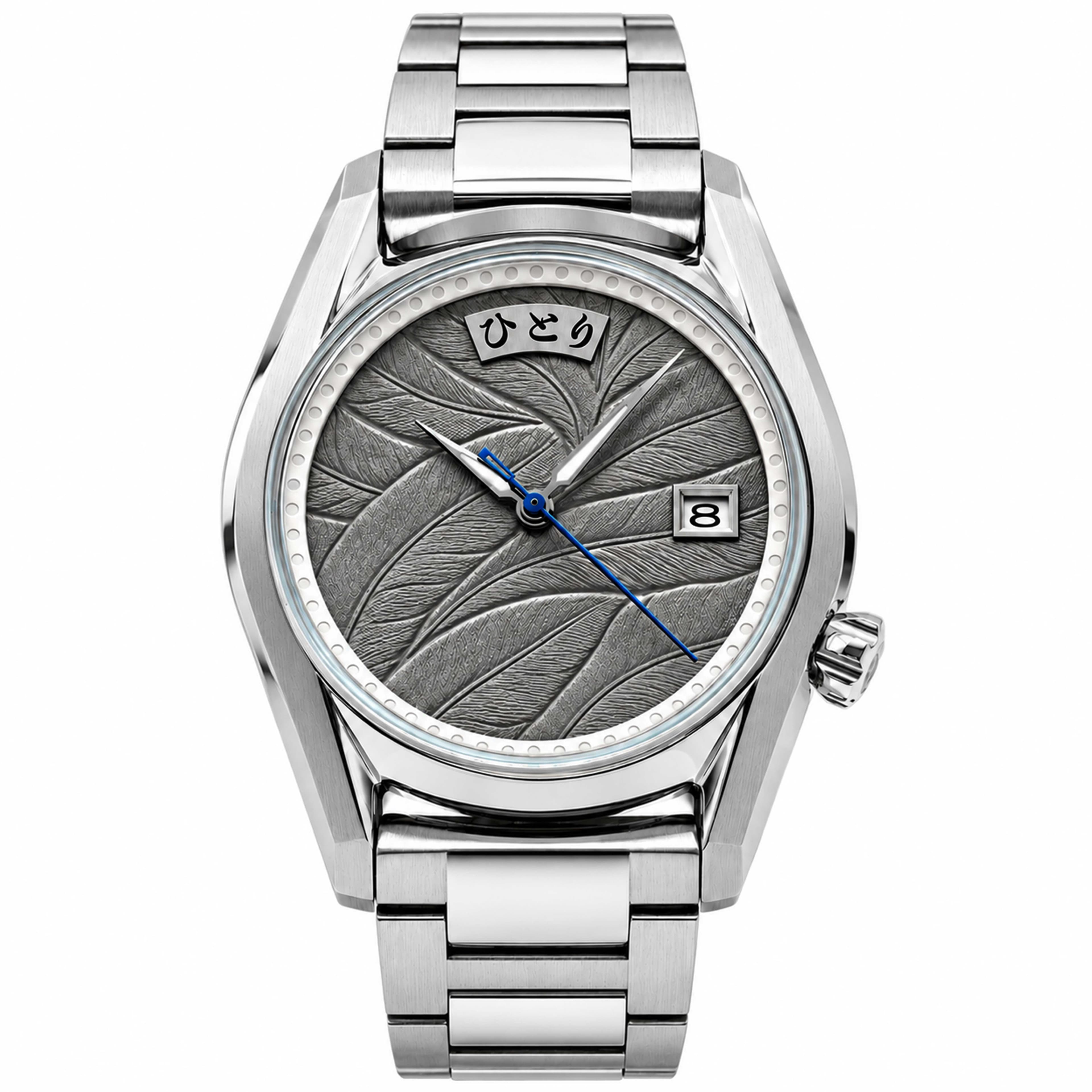
- Diameter
- 38.9mm
- Lug-to-lug
- 46.0mm
- Thickness
- 10.0mm
- Water Resistance
- 100m
A New Expression Of The Yoshino Silhouette
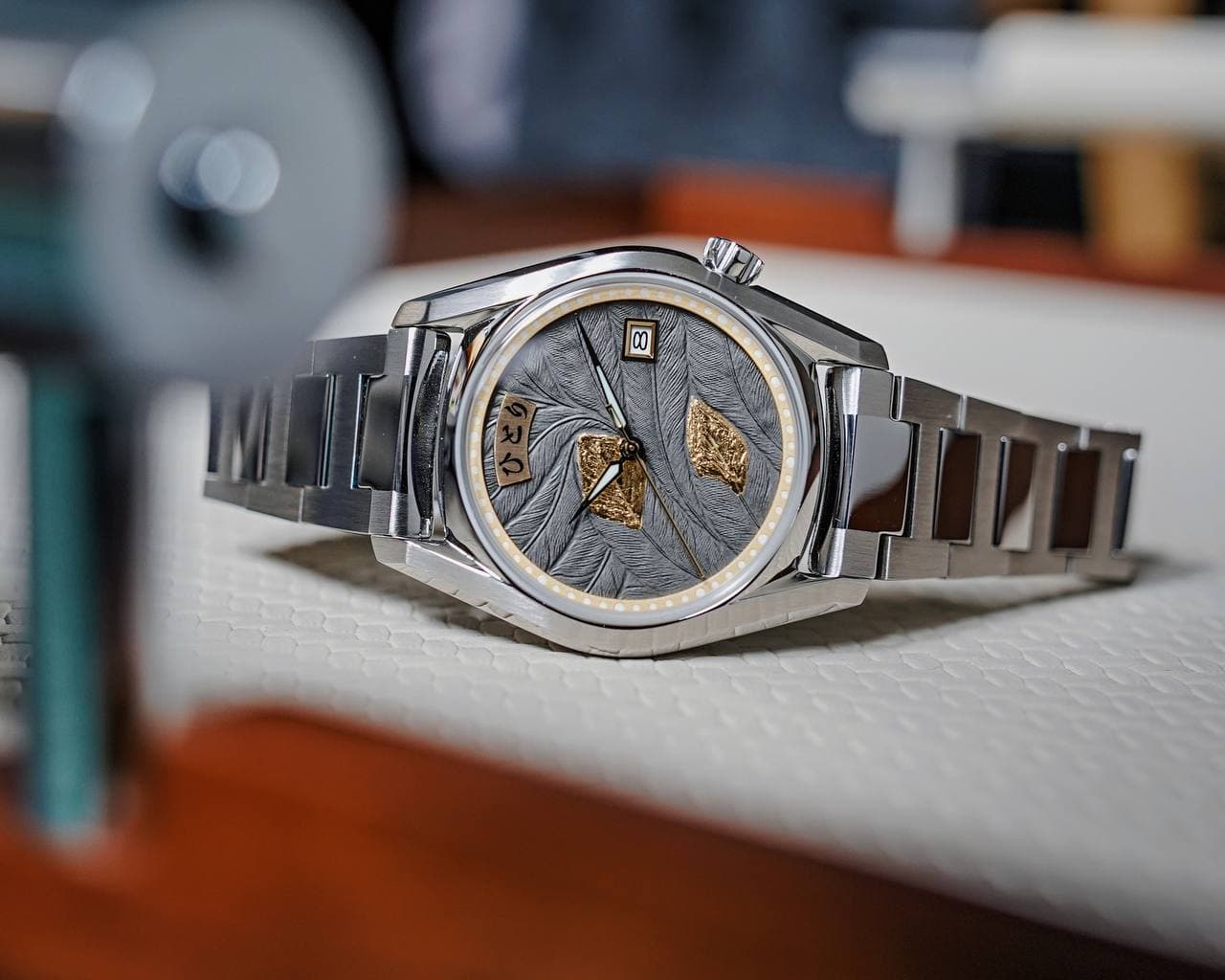
Rather than changing its identity, Hitori returned to the original Yoshino silhouette and began refining its proportions. The familiar bezel-free architecture remains, together with the sharp planes and restrained geometry that have defined the collection, but almost everything around it has been reconsidered. The new case now in a noticeably slimmer and more graceful profile while retaining 100 metres of water resistance. Yet the intention was never simply to make Yoshino thinner. It was about discovering a better relationship between mass and line, allowing the architecture to feel lighter without losing its presence.
This becomes particularly apparent through the lugs. The central body remains relatively compact and classical, while the lugs extend confidently outward as long, finely drawn lines. They become progressively more slender as they leave the case, reducing visual mass while allowing the eye to continue naturally beyond the central body. Viewed from the side, the transition from case to lug feels almost uninterrupted, giving Yoshino a longer and more elegant posture without increasing its diameter.
There are smaller details that bring this new Yoshino closer to the design language Hitori has developed over the years. The Tokudai Daiya crown, first created for Nexus, now finds its way onto Yoshino, its oversized diamond-cut grooves bringing a little more tactility and visual weight against the newly slender case.
The Quiet Discipline of Zaratsu
The finishing was equally important to this evolution. For the first time on Yoshino, selected surfaces are completed using Zaratsu polishing, undertaken by a veteran craftsman working with an original Zaratsu polishing machine at Hitori’s atelier in Nagano. Rather than simply producing a brighter surface, the technique creates exceptionally flat, distortion-free planes and precise transitions. These mirror-polished surfaces are set against Hitori’s satin-finished planes across the upper and side portions of the case. As light travels from one surface to another, the geometry becomes considerably more apparent, particularly along the slim case and elongated lugs. The detachable case construction also allows areas normally hidden from view, including the inner lugs and underside of the mid-case, to receive the same attention, with more than seven stages of cutting and polishing carried out by hand.
For Hitori, this was also an opportunity to bring more of its finishing craft into Yoshino. The slimmer case may appear simpler at first glance, but its long, narrow lugs and sharply defined planes leave very little room for inconsistency. Each transition between mirror polishing and satin brushing therefore has to remain deliberate and precise, allowing the quality of the finishing to reveal itself through the geometry rather than through decoration.
The Glow Of Blossoms, Enduring Mechanics.
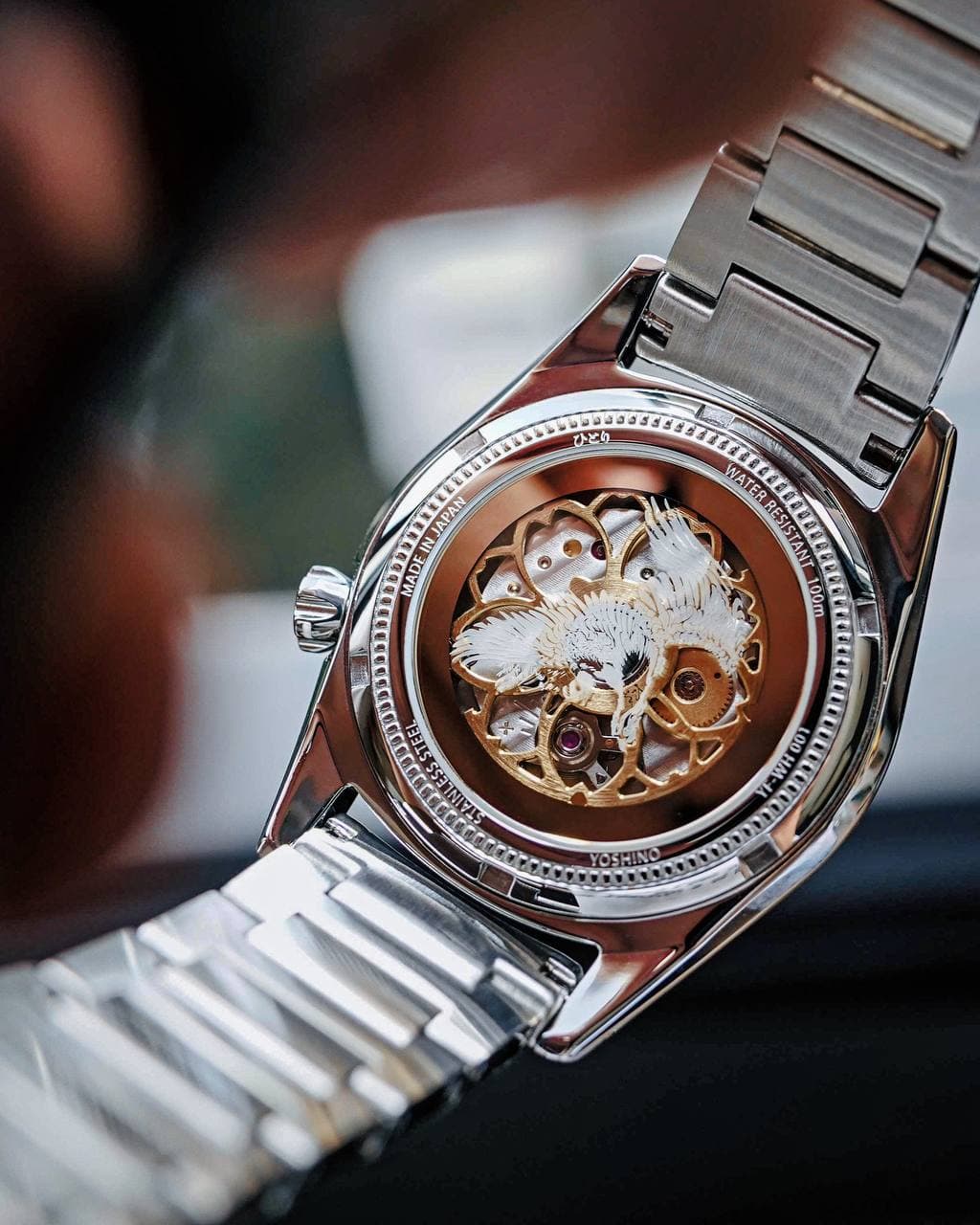
Turn the Yoshino Feza over and the feather finally finds its source. Set into the screw-down caseback is a custom sapphire crystal, delicately laser engraved with an eagle in flight. Its wings stretch almost across the sapphire, each individual feather drawn in fine lines that quietly echo the feathered landscape on the dial above. Rather than treating the eagle as an emblem, Hitori wanted to capture it in movement, wings open and suspended for a brief moment in flight. The eagle was chosen as an acknowledgement of where much of Hitori’s fascination with the feather began. Across different Native American traditions, the eagle carries significance extending far beyond decoration, though its meanings vary between individual peoples and traditions.
Visible beneath it is the Japanese-made Miyota 9015, a movement chosen partly for the same reason Hitori revisited the proportions of the new Yoshino. At only 3.9mm thick, its relatively slender architecture allowed the case to be brought down to the desired profile without compromising the practicality expected of an everyday watch. The 24 jewel automatic calibre operates at 28,800 vibrations per hour, with hacking seconds, manual winding and quickset date, while providing approximately 42 hours of power reserve. Manufactured in Japan, the 9015 has earned a reputation over the years as a dependable, straightforward movement, something well suited to the utilitarian side of Yoshino.
Beneath the eagle sits something from an altogether different landscape: the Hanaakari Rotor 花明かり.
Hanaakari describes the gentle radiance of blossoms, particularly the way pale petals can appear to illuminate the darkness around them. Hitori translated that feeling into an openworked golden rotor, its forms revealing different fragments of the Miyota 9015 as it turns. Against the cooler mechanical tones of the movement, its warm finish creates a subtle contrast. Bridges, wheels and screws appear briefly through the openings before disappearing once more.
Hashi 橋 Bracelet
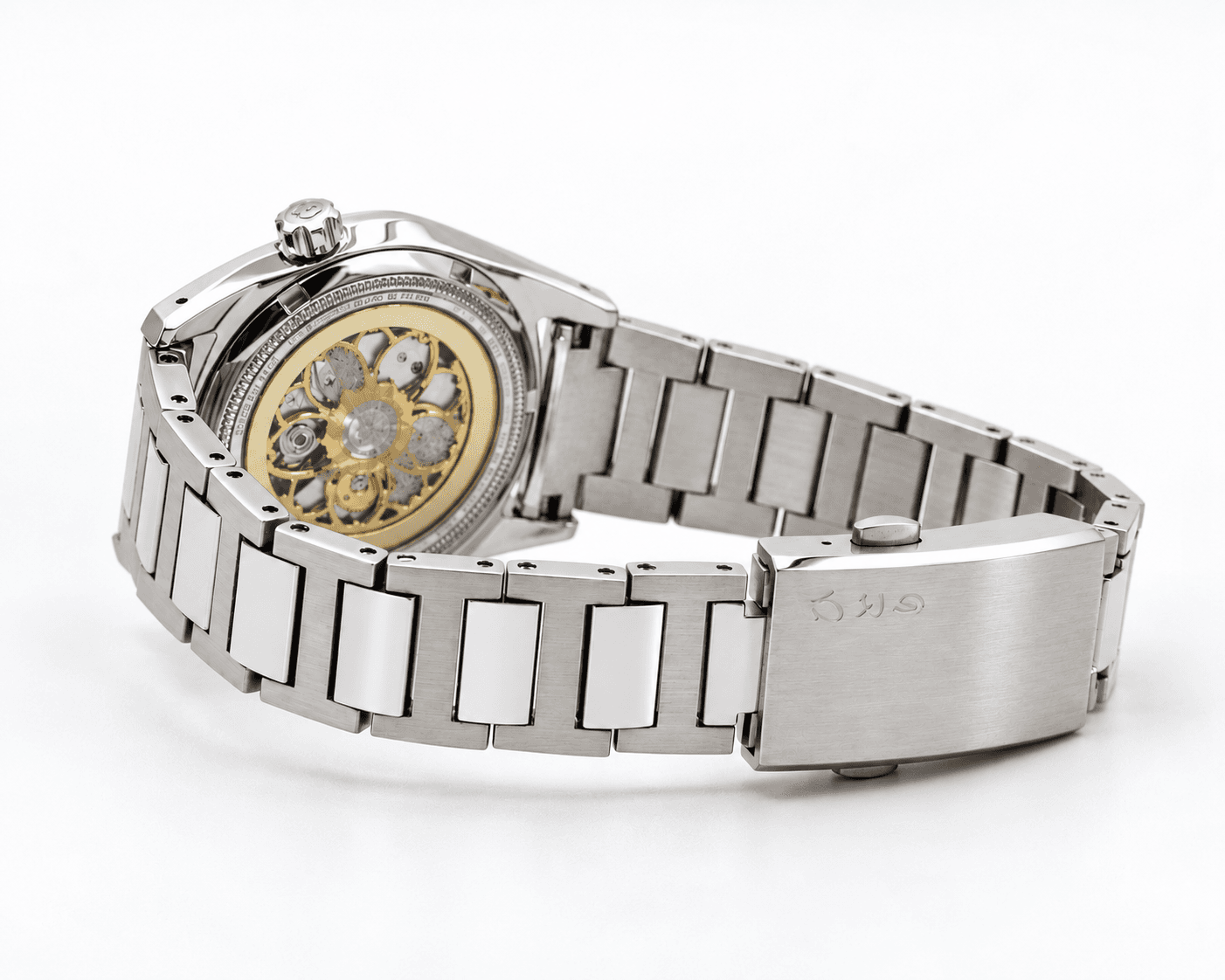
Each Yoshino Feza is paired with Hitori’s newly developed 20mm Hashi Bracelet / 橋, an articulated multi-link bracelet designed alongside the slimmer proportions of the new case. Hashi means “bridge” in Japanese, a name that came naturally from the construction itself. Look closely at an individual link and its architecture resembles the letter H, with two broader sides connected across the centre by a slender bridge. Repeated one after another, these small structures come together to form a continuous bracelet. There is something rather Hitori about this idea of a bridge. Each link exists individually, yet only becomes complete through its connection to the next. While its construction is architectural when viewed closely, the experience on the wrist was intended to feel quite the opposite. Each link articulates freely against its neighbour, allowing the bracelet to fall naturally around the wrist with an almost organic softness.
From above, the repeating H-shaped links give Hashi a distinct rhythm and identity of its own. From the side, however, the bracelet remains remarkably slim and fluid. Alternating brushed and polished surfaces further define its architecture as light travels across the individual links, creating enough visual interest without taking attention away from the watch itself. Each polished surface is carefully defined against its satin-brushed neighbour, allowing even the smallest links to catch and release light with the same precision found across the case.
Completing the Hashi is a newly developed retro-inspired clasp, designed specifically around the proportions of the new Yoshino. Its broad brushed surface and restrained profile recall the simple folding clasps found on bracelets of an earlier era, while concealed within is a modern, tool-free micro-adjustment system that allows the fit to be changed throughout the day. The mechanism remains hidden so that none of this functionality interrupts the simplicity of the clasp from the outside. A subtle 「ひとり」 engraving is the only signature Hitori felt it needed. From the open end links and articulated construction to the hidden micro-adjustment, much of what makes Hashi special is something experienced rather than immediately seen.

Made To Be Worn
Feza began with something Hitori has admired for a long time: the way something found in nature can pass through the hands of a craftsman and emerge in another form, while somehow retaining a little of where it came from.
A feather becomes a surface drawn through hundreds of lines. An eagle appears quietly above the movement. Blossoms turn beneath it. Even the bracelet is made from individual bridges, each separate, yet connected to the next. None of these details were intended to speak particularly loudly on their own. They simply came together slowly, until Yoshino felt like the watch Hitori wanted it to become.
Hitori likes to think about watches in much the same way. They travel with their owners, gather small marks, accompany ordinary days and important ones, and eventually become associated with memories their maker could never have anticipated.
Some things become meaningful through being worn.