
The Human Hand Behind the Reflection
Craft Dialogues鏡のような輝きに宿る、職人の手仕事 · ザラツ仕上げ

Zaratsu Polishing
The Human Hand Behind the Reflection
There is something quietly fascinating about the way a piece of metal comes to life in the hands of a craftsman. If you have followed our watchmaking journey over the years, you might have noticed that we have developed a rather particular obsession with the execution of watch cases, especially the finer nuances of their finishing and polishing. Much of this fascination stems from my own appreciation for the craft. I have long been drawn to the extraordinary results of black polishing in traditional Swiss watchmaking, and equally, the remarkable precision of Japanese Zaratsu polishing, as practised by the craftsmen at Grand Seiko and Kyowa Precision, the manufacturer behind Minase watches. To me, these represent some of the finest expressions of metal finishing in horology, where an otherwise industrial process becomes something remarkably close to an art form. Naturally, I have always harboured the ambition of bringing a little of this craftsmanship into Hitori’s own creations. As fortune would have it, we were given the opportunity to work with our atelier’s master polisher in Nagano, whose experience and understanding of this traditional technique allowed us to finally realise that long-held aspiration with our latest Yoshino Feza collection.
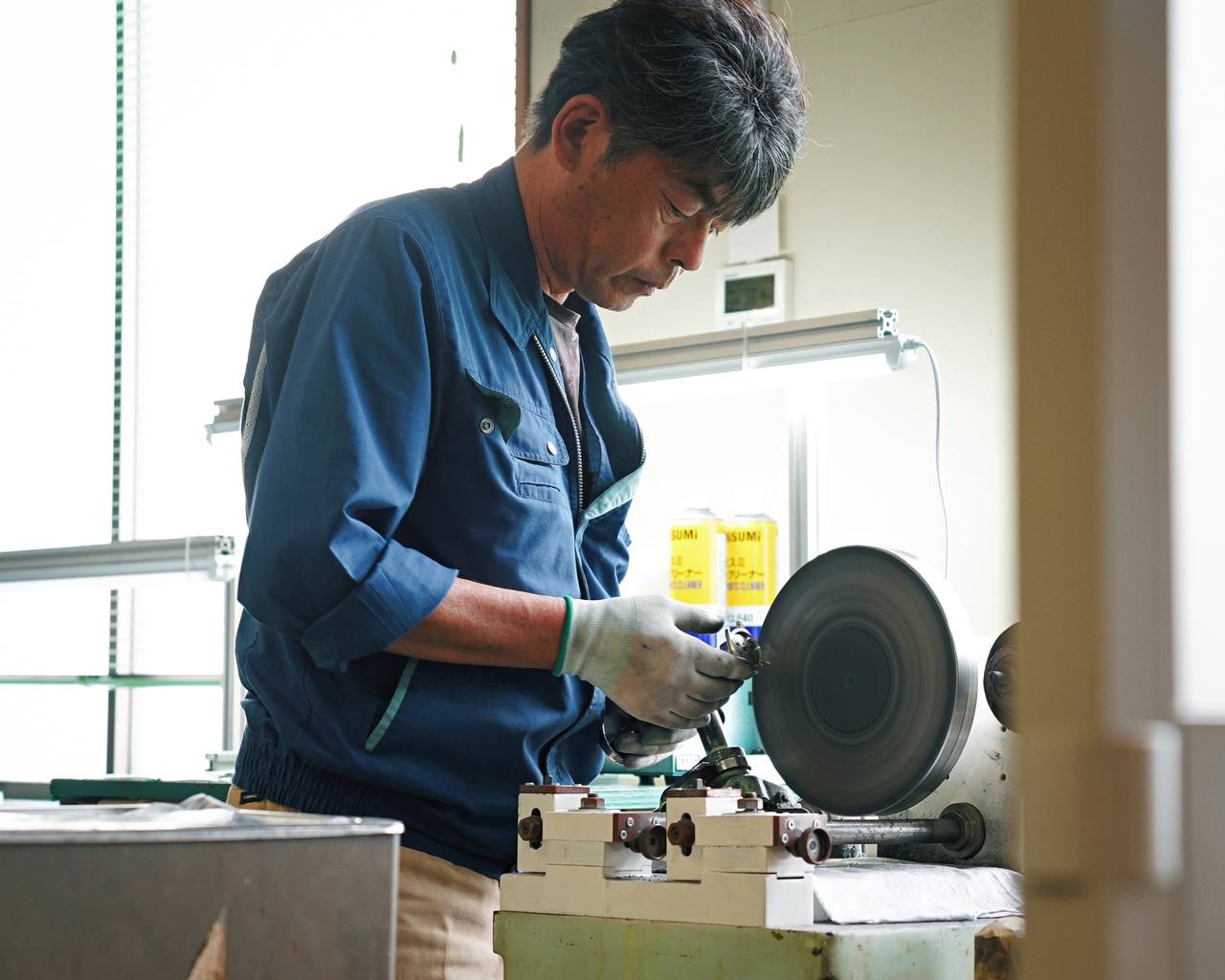
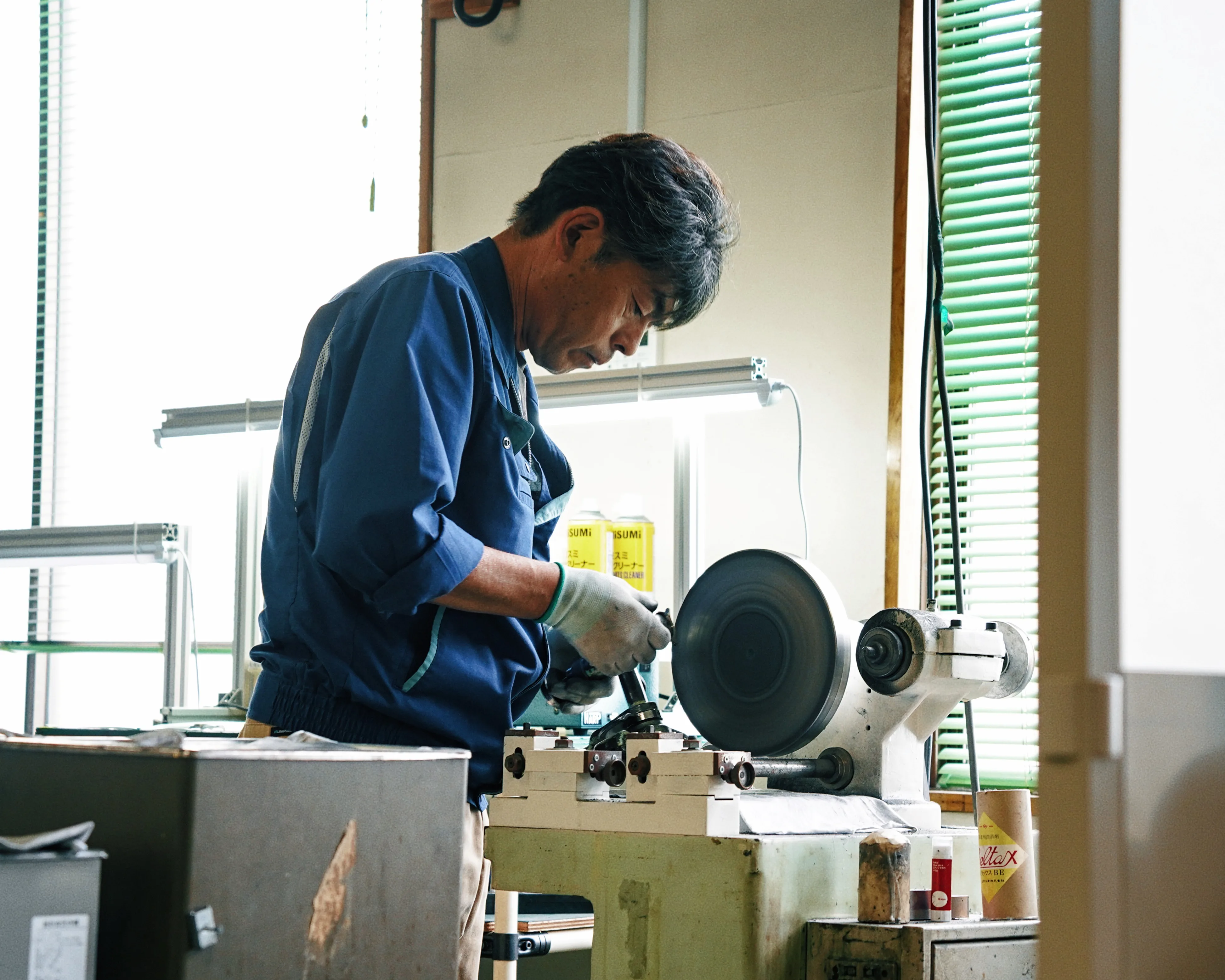
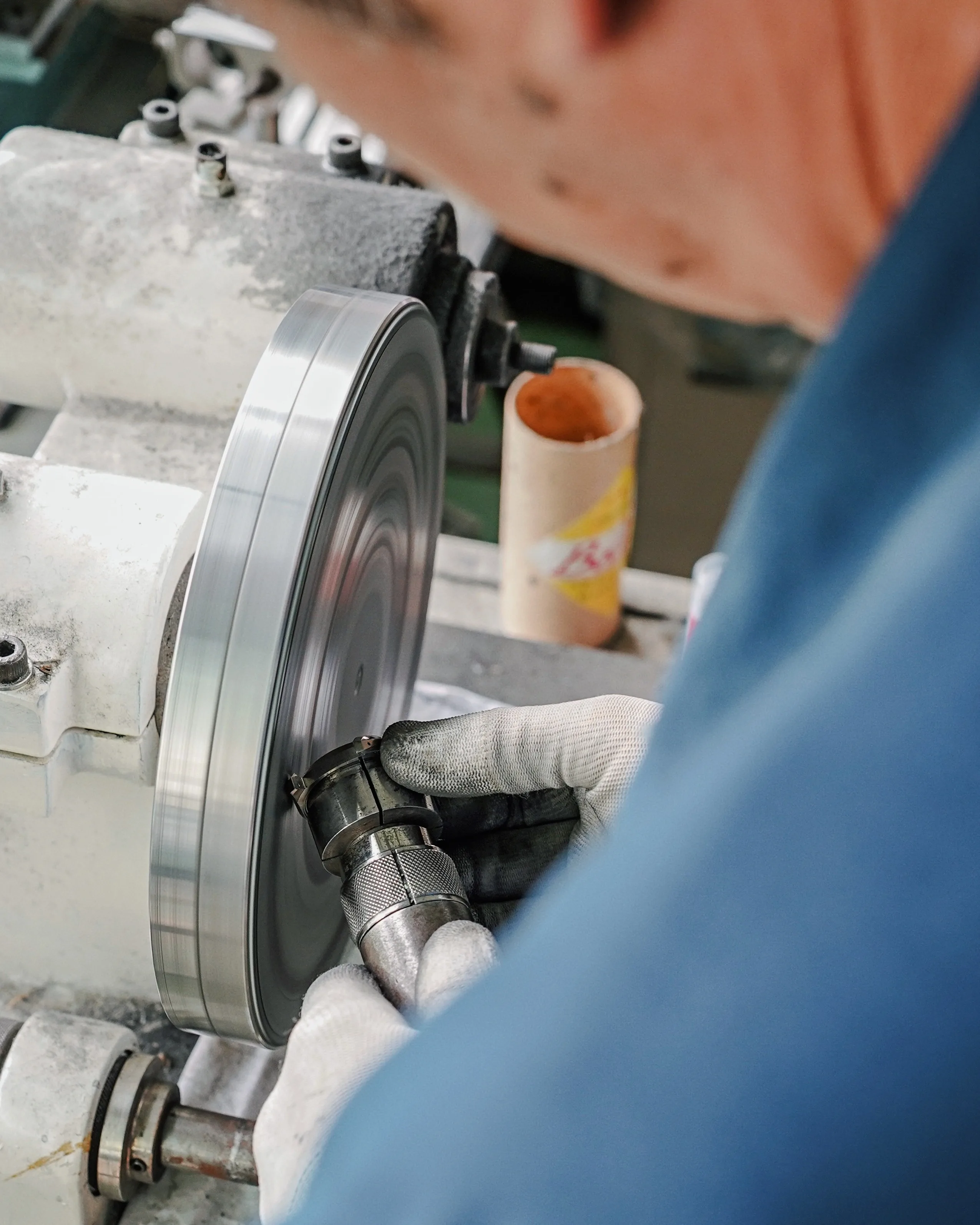
What made this experience particularly meaningful was the opportunity to witness the entire finishing process firsthand during our recent visit to the atelier. Rather than simply admiring the finished results, we could finally observe the many steps, careful adjustments and accumulated experience that go into achieving them. At the heart of the workshop stood a vintage flat polishing machine acquired from Seiko, an ageing piece of equipment that continues to serve its purpose in the hands of an experienced craftsman. Yet what we came to appreciate was that Zaratsu polishing is not merely about achieving a brilliant mirror finish. At our atelier, it is first and foremost about preparing and refining the metal into beautifully defined surfaces, preserving their intended geometry and the sharp transitions between each facet. The surfaces are subsequently refined through further finishing to achieve their final lustre. Watching our Yoshino cases gradually take shape gave us a newfound appreciation for the patience, sensitivity and years of experience behind something that might otherwise appear so effortless. More than the machinery or the brilliance of the finished metal, it was the quiet relationship between the craftsman, his tools and the material before him that stayed with me. And perhaps that is what makes this entire endeavour so meaningful to us at Hitori. Behind every beautifully finished surface is a pair of human hands, and a lifetime spent learning how to use them.
An Old Machine, A Continuing Craft
The Vintage Sallaz Machine and Its Connection to Seiko
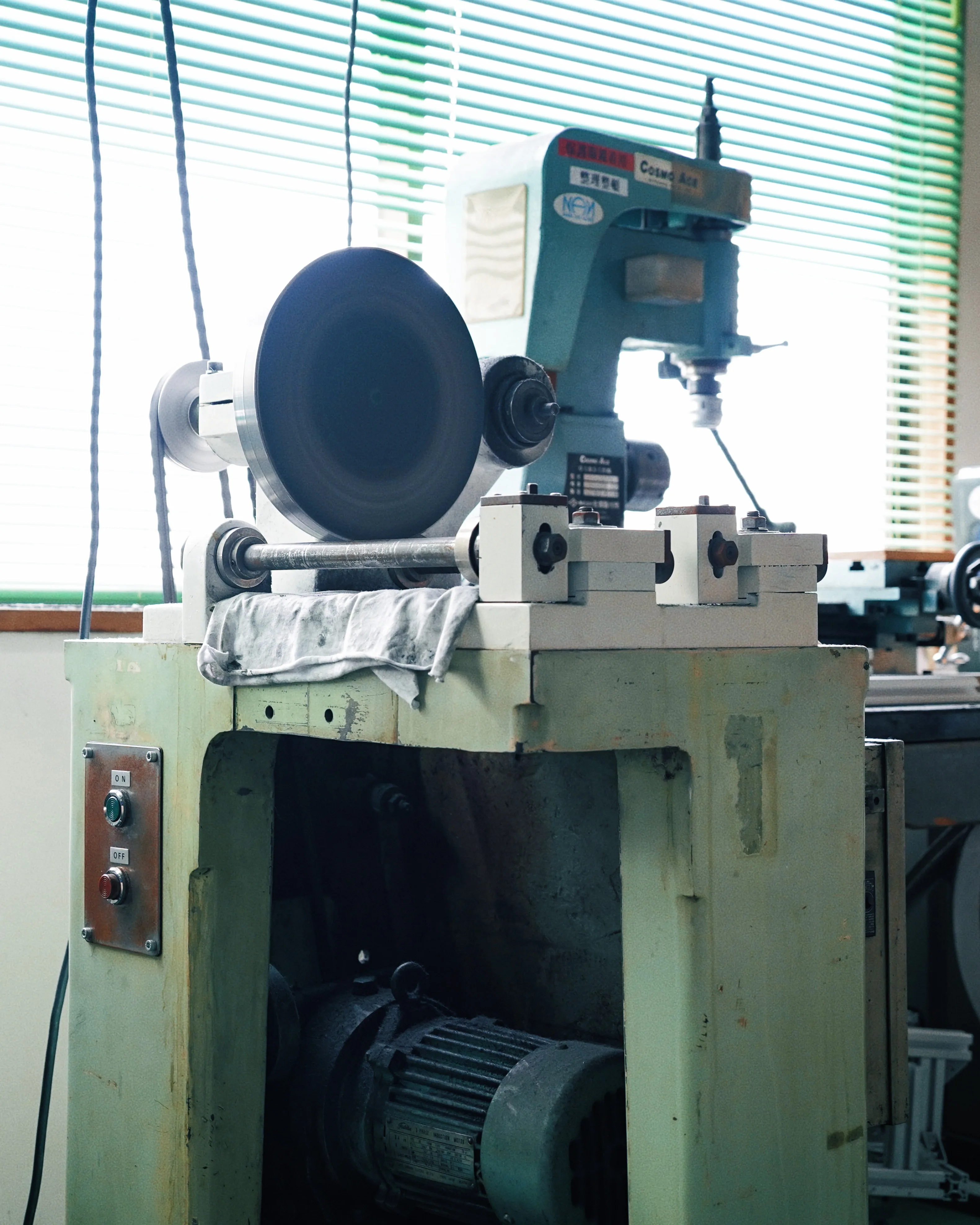
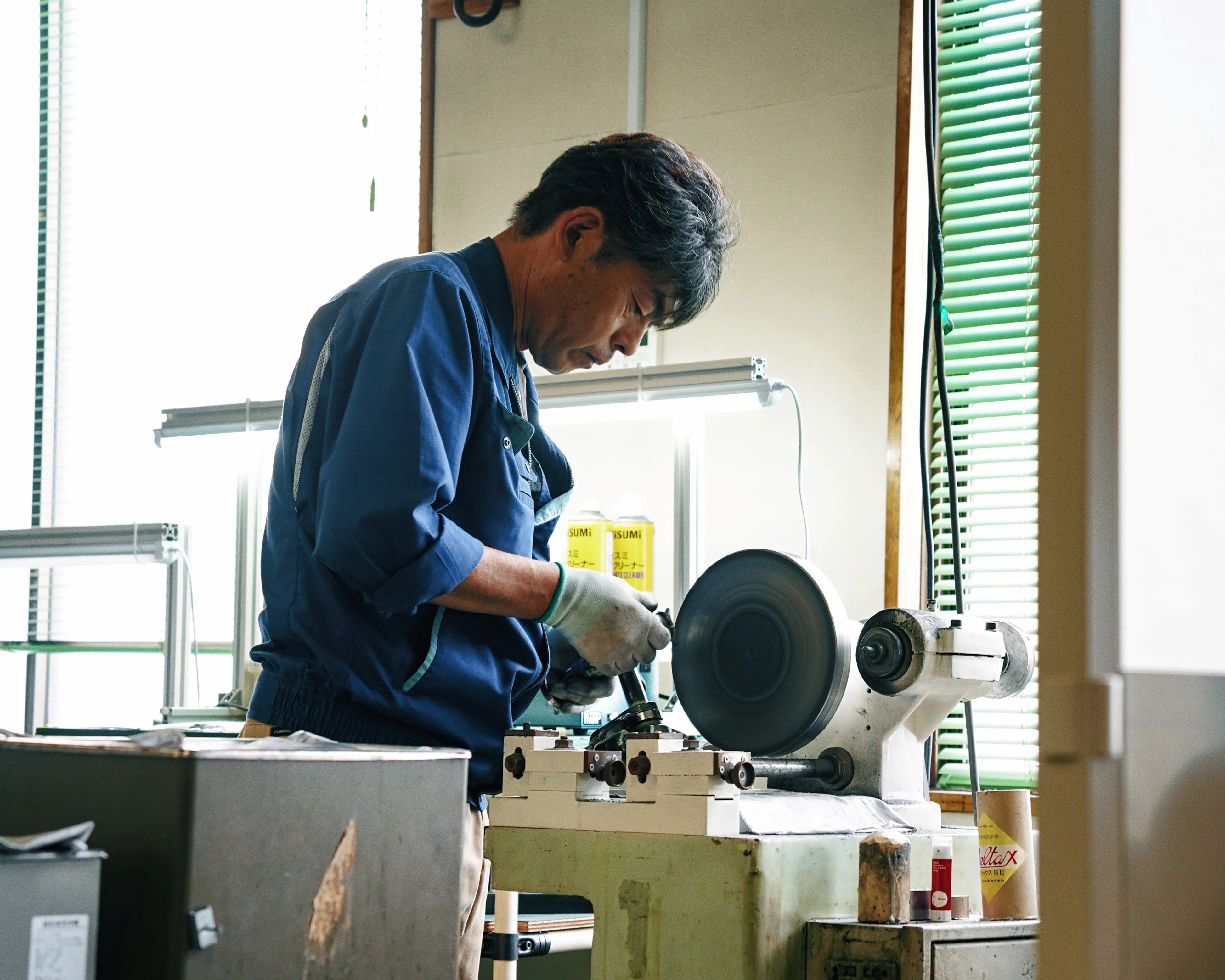
During our visit to the atelier in Nagano, one particular piece of equipment caught my attention almost immediately. Tucked away in a corner of the workshop stood an ageing flat polishing machine dressed in a rather charming shade of emerald green. Its weathered exterior bore the marks of many years of use, yet there was something wonderfully nostalgic about it, as though it had lived an honest and purposeful life. There was nothing extravagant about its appearance. In fact, compared to the sophisticated machinery we have grown accustomed to seeing in modern manufacturing, it looked almost unassuming. Yet this was the very machine our master polisher would use to carry out the Zaratsu polishing on our Yoshino cases. What made it even more fascinating was learning that the atelier had acquired it from Seiko many years ago. Given Seiko’s longstanding association with this particular method of case finishing, there was something rather special about seeing a machine with such a connection continuing its work in our modest Japanese watchmaking atelier today.
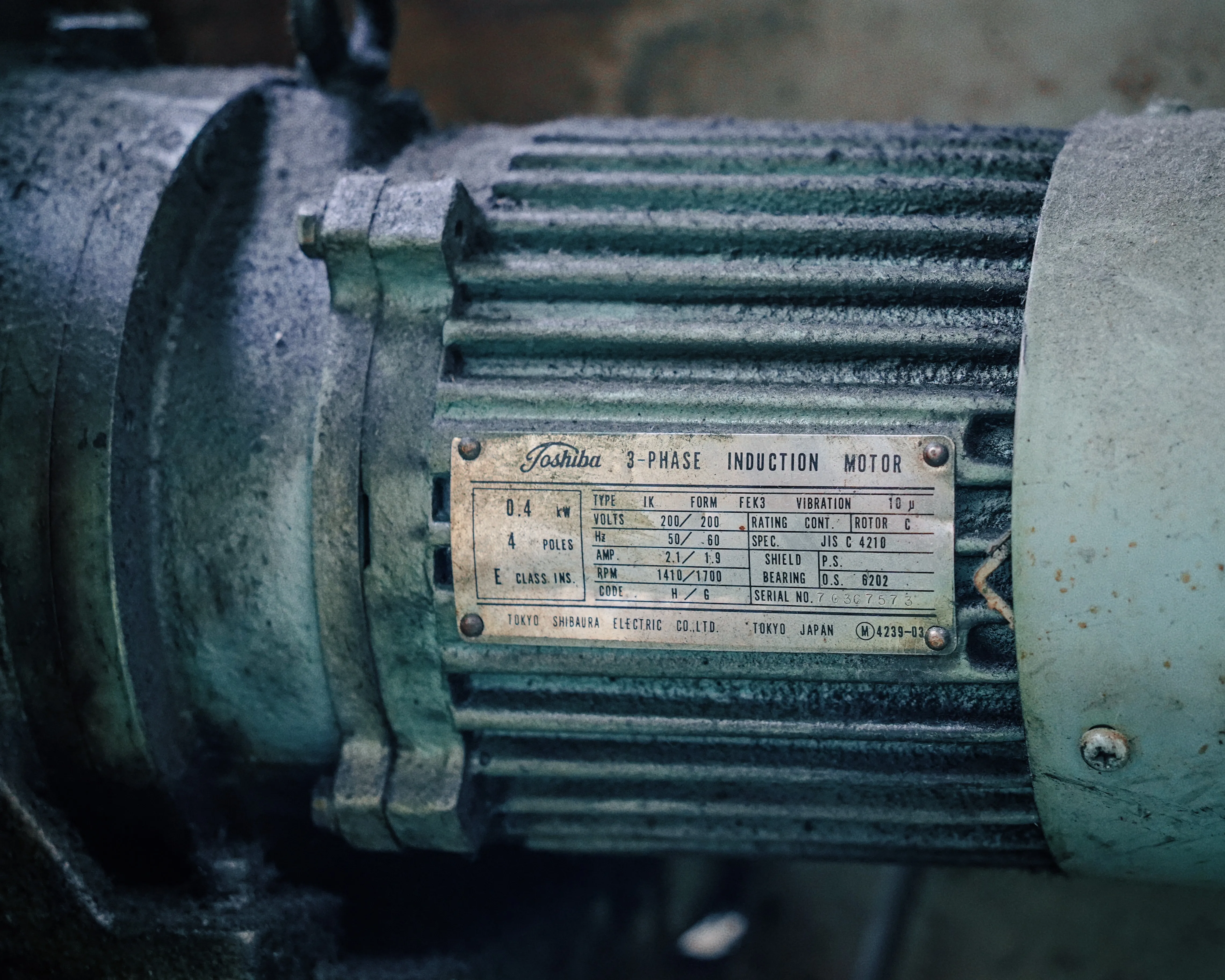
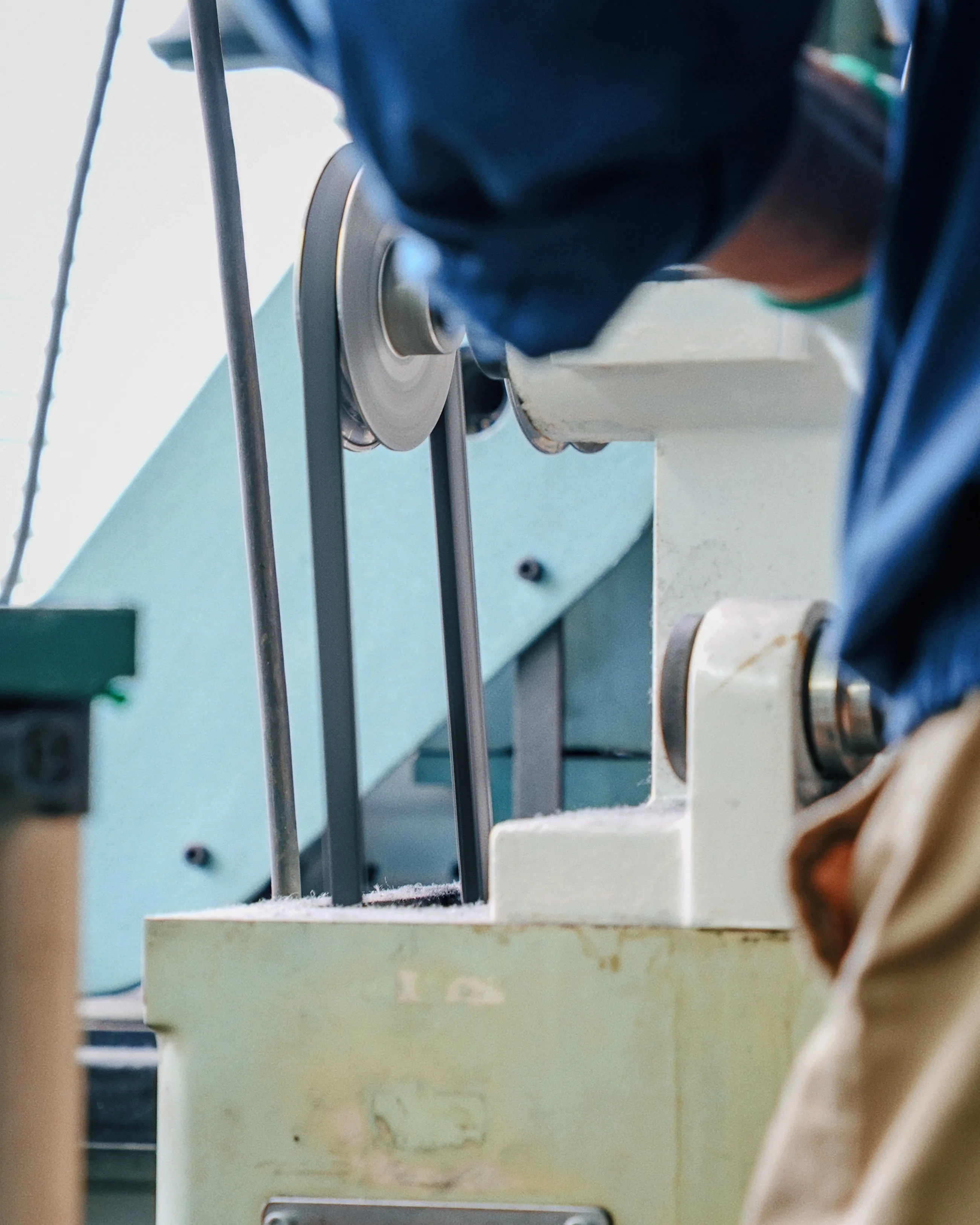
Taking a closer look, the machine was a wonderful reminder of an earlier era of industrial craftsmanship, with a mechanical charm that I found difficult to resist. Beneath its heavy metal housing sat an old Toshiba electric motor, still bearing the name Tokyo Shibaura Electric, the company’s former name before it officially became Toshiba Corporation in 1978. Strangely enough, the sight of that little motor immediately reminded me of the Japanese Tamiya motors I grew up admiring, those wonderfully simple mechanical things capable of bringing an otherwise lifeless object into motion. And when our master polisher switched on the machine, watching the belt drive come to life at the rear brought another familiar image to mind. It reminded me of an old Porsche being brought to life, where the mechanical movements, subtle vibrations and sounds are as much a part of the experience as the machine itself. Perhaps it was not such an odd comparison to make in a watchmaking atelier after all. There was something immensely satisfying about watching this ageing machine awaken and settle into its working rhythm. No digital displays or elaborate electronic controls, just a motor, a rotating belt and a polishing disc, all working together much as they were intended to decades ago.
Yet what made the experience truly memorable was not so much the machine itself, but the person standing before it. As our master polisher began working on an unfinished Yoshino case, his attention seemed to narrow entirely to the surface before him. I even caught myself holding my breath on several occasions, almost unconsciously drawn into the intensity of his concentration. The moment the metal met the rotating polishing disc, his focus was absolute, yet his movements remained remarkably smooth and unhurried. His hands seemed to know precisely how much pressure to apply, when to make the smallest adjustments and when to withdraw the case for inspection. It was almost as though he knew both the metal and the ageing machine by heart, a familiarity that could only have come from years of working with the same tools and materials. Watching him work from such a close distance was genuinely mesmerising, especially knowing how unforgiving the process could be.
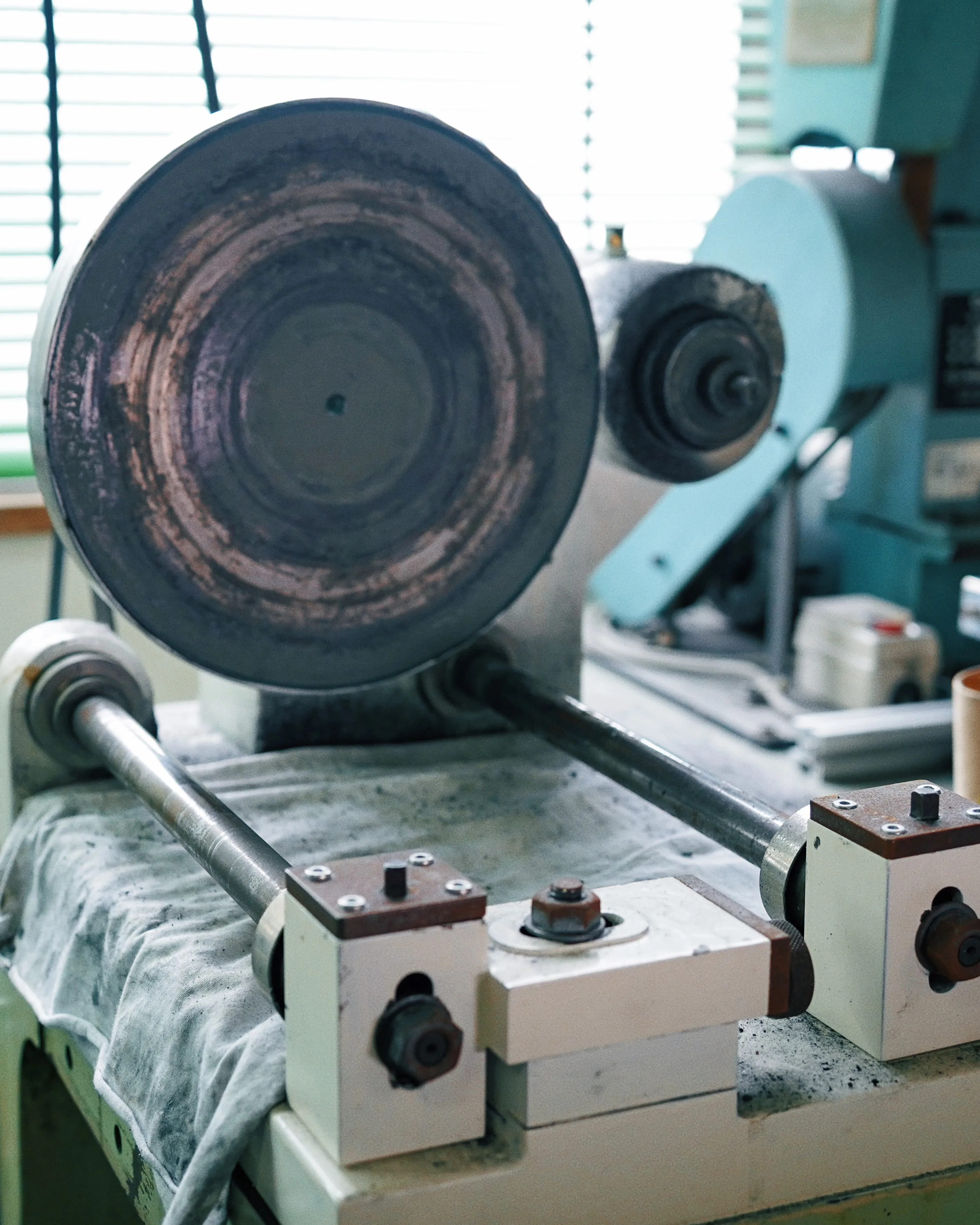
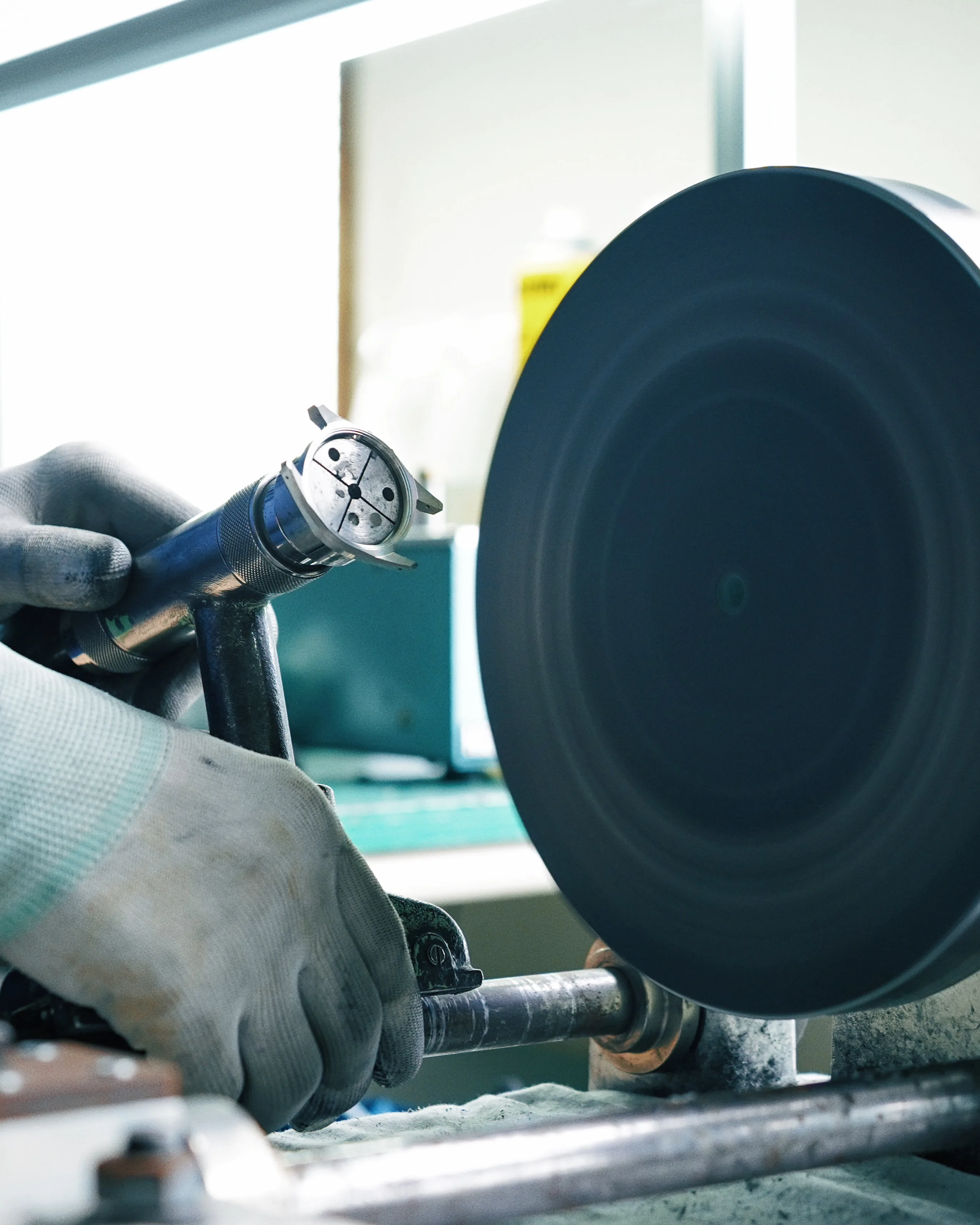
Throughout the demonstration, our master polisher was wonderfully open about both the capabilities and limitations of the ageing machine. He explained that not every surface or case geometry is suitable for Zaratsu polishing. Certain shapes and angles make it difficult to maintain even contact with the flat rotating disc, while others may be impossible to reach without compromising the surrounding surfaces. Attempting to polish an unsuitable area could risk distorting its intended form. This was something I had not fully appreciated before. For all the admiration surrounding Zaratsu, it is not a technique that can simply be applied to every watch case with equally beautiful results. The case itself must be thoughtfully designed with the polishing process in mind. Yet when the geometry is suitable and the technique is executed with care, the reward is a remarkably flat surface capable of producing exceptionally clear, distortion-free reflections after final finishing. It is this relationship between thoughtful design, mechanical limitations and human judgement that makes the craft so interesting to me. The machine does not simply accommodate every design placed before it. Rather, the designer and craftsman must understand what it can achieve and work together within those boundaries.
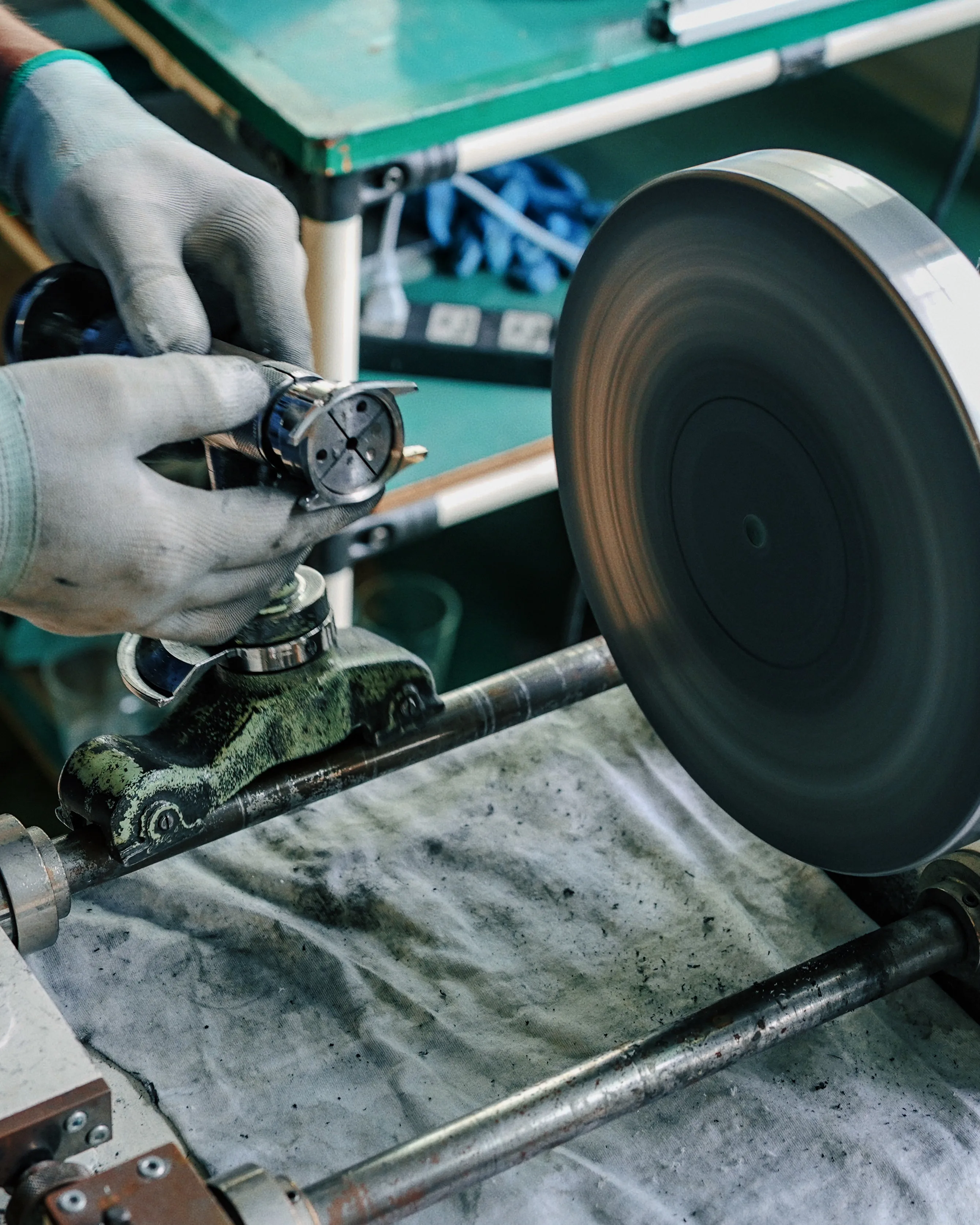
Looking back, I think this was one of the experiences during our visit that left the deepest impression on me. I have always had a soft spot for old machinery, particularly the sort that continues to serve a meaningful purpose long after newer alternatives have appeared. But seeing this vintage polishing machine in action, and more importantly, witnessing the extraordinary familiarity our master polisher had developed with it, gave me an entirely different appreciation for the craft. There was something deeply satisfying about the confidence with which his hands moved, almost effortlessly, while knowing that every small movement carried a consequence for the finished case. These are precisely the little things that have always drawn me towards traditional craftsmanship. Not merely the pursuit of a beautiful result, but the knowledge, patience and countless hours of practice that make such a result possible. To have witnessed this process firsthand, with our own Yoshino cases gradually taking shape before our eyes, was something I felt genuinely grateful for. It also made me curious about something I had previously given little thought to: just how difficult is it to achieve such a finish when so much depends upon the steadiness of a person’s hands?
The Art of Holding an Angle
Why Zaratsu Polishing Is Far More Difficult Than It Appears
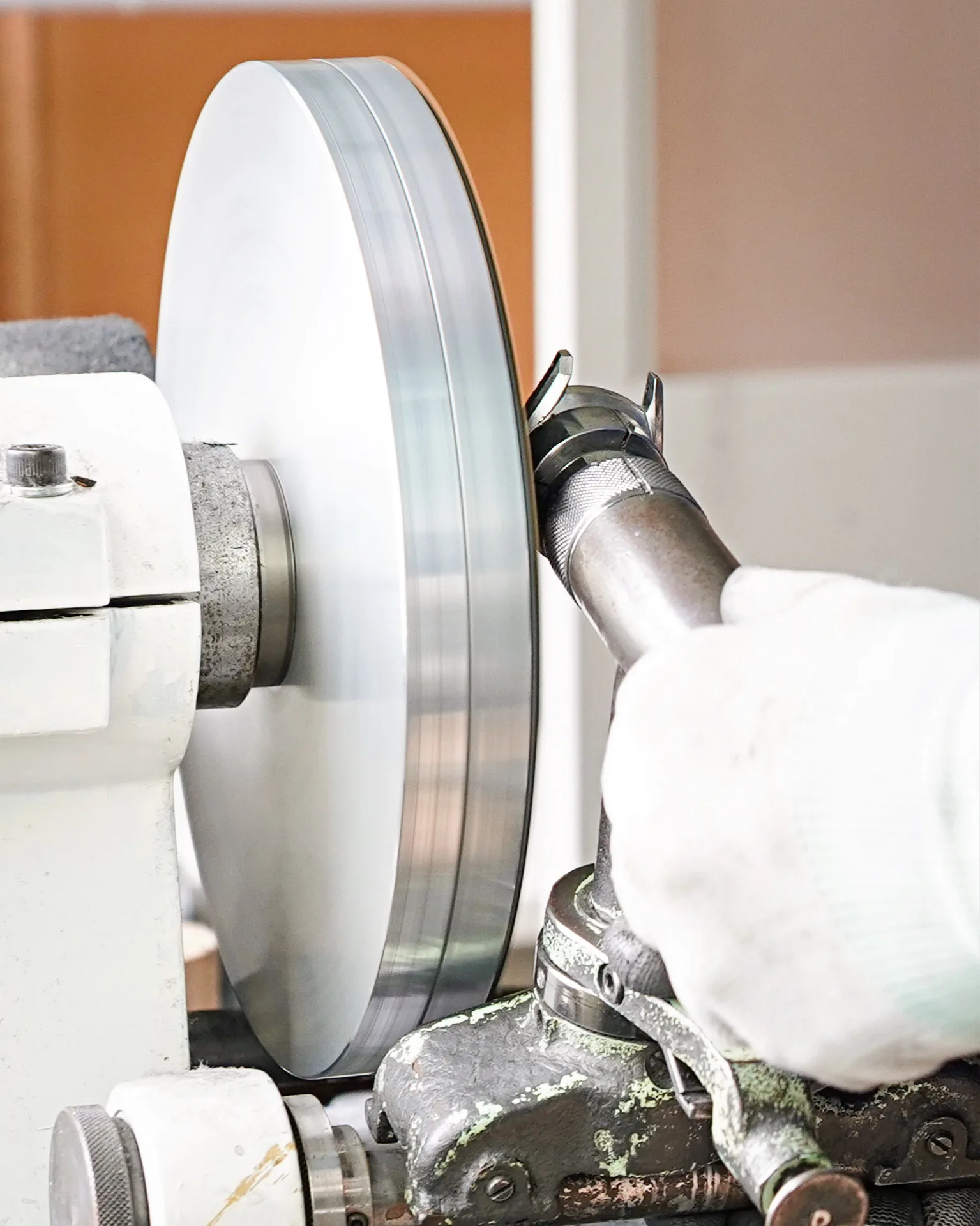
At first glance, watching someone meticulously polish a watch case might seem like a rather straightforward affair. After all, how arduous could it really be to hold a piece of metal against a rotating polishing disc until it begins to shine? I must admit that even with my longstanding fascination for case finishing, witnessing the actual process in Nagano gave me an entirely different perspective on the skill, patience and sensitivity involved. Unlike conventional buffing, where a softer polishing wheel naturally conforms to the contours of the metal, Zaratsu polishing is far less forgiving when working on precisely defined flat surfaces. The craftsman must constantly maintain a delicate balance between three essential elements: angle, pressure and movement. Each influences the other, and even the slightest inconsistency can affect the resulting surface. What appears almost effortless in the hands of an experienced polisher is, in reality, a continuous exercise in control, where years of accumulated knowledge and familiarity with the material are quietly put to work.
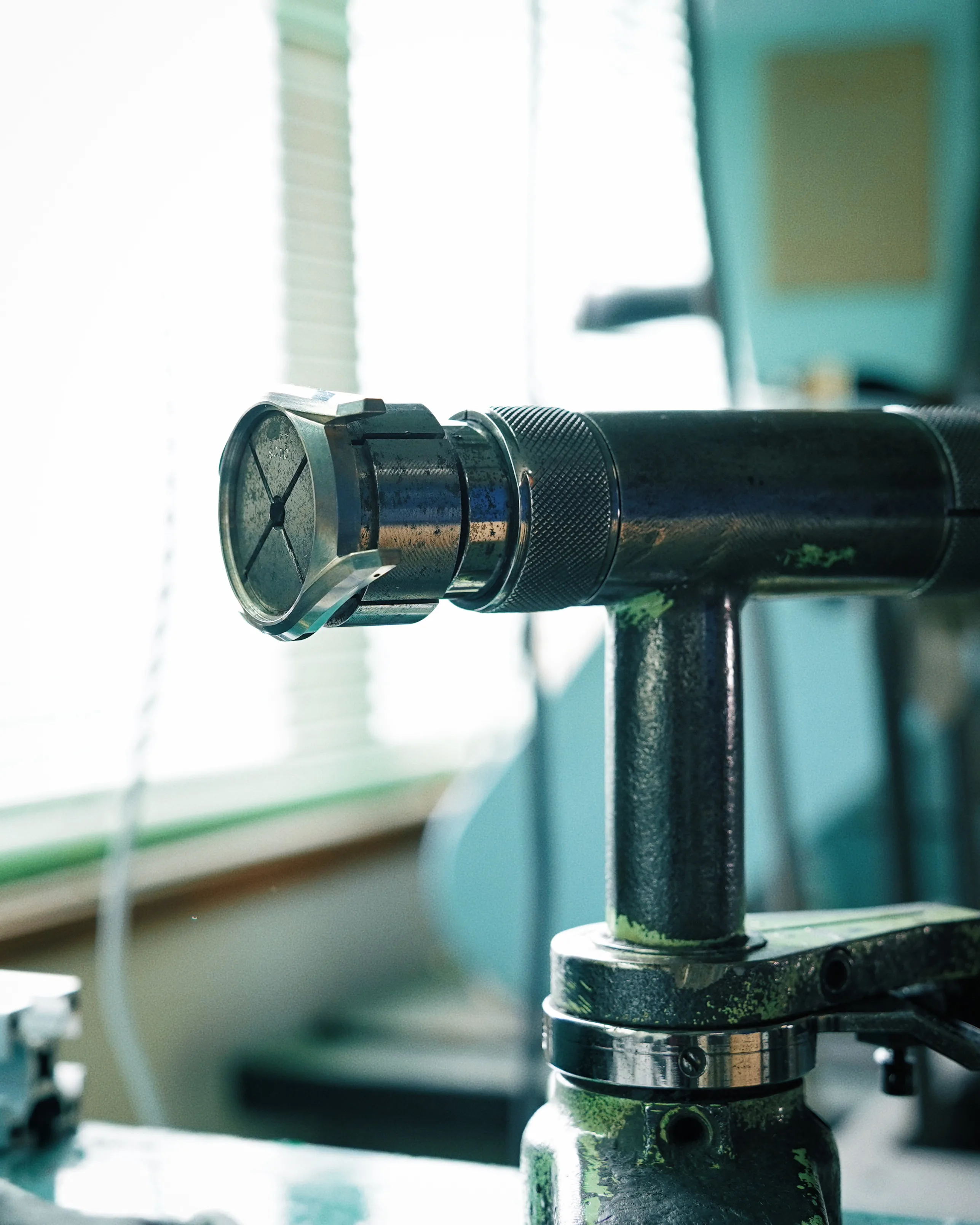
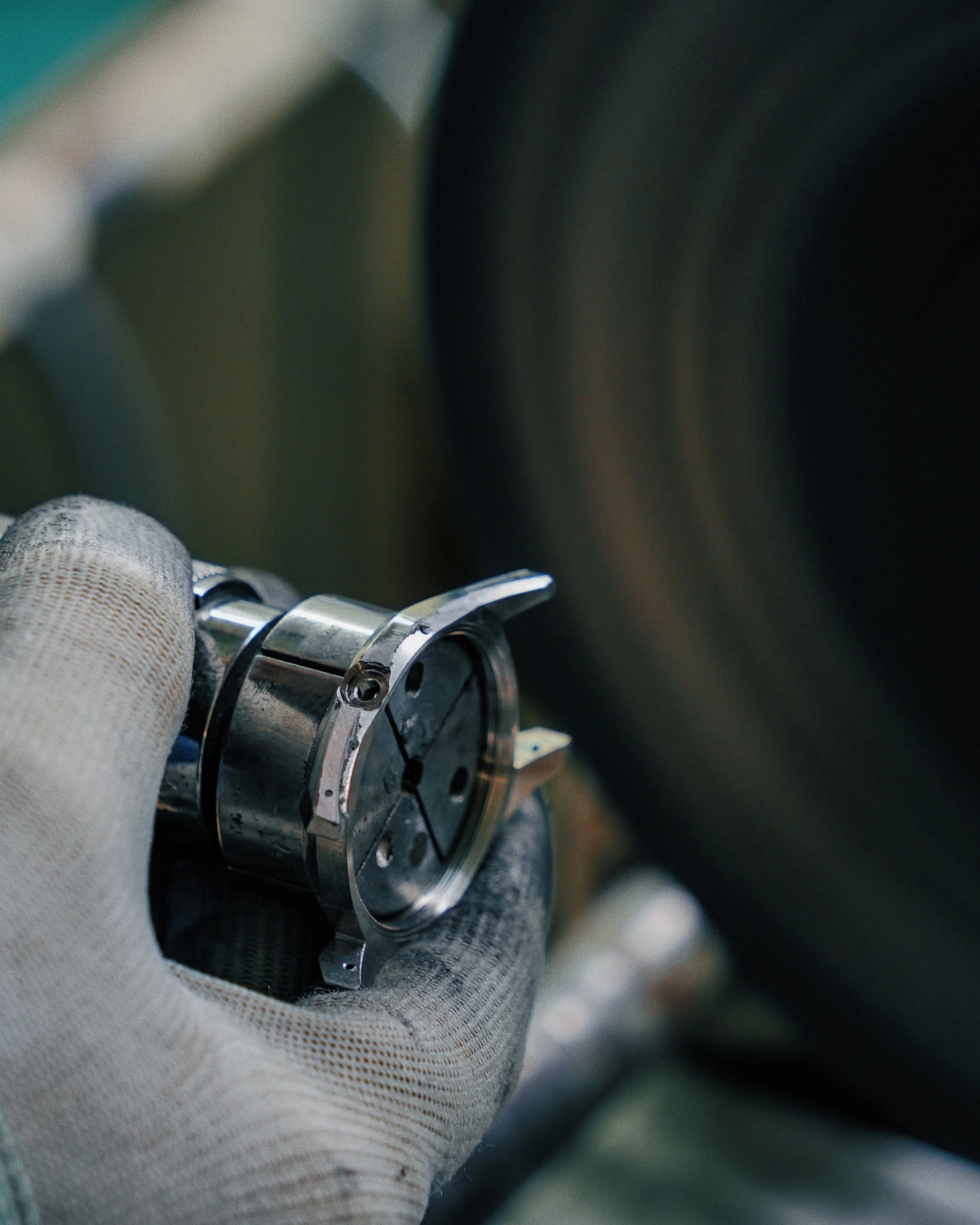
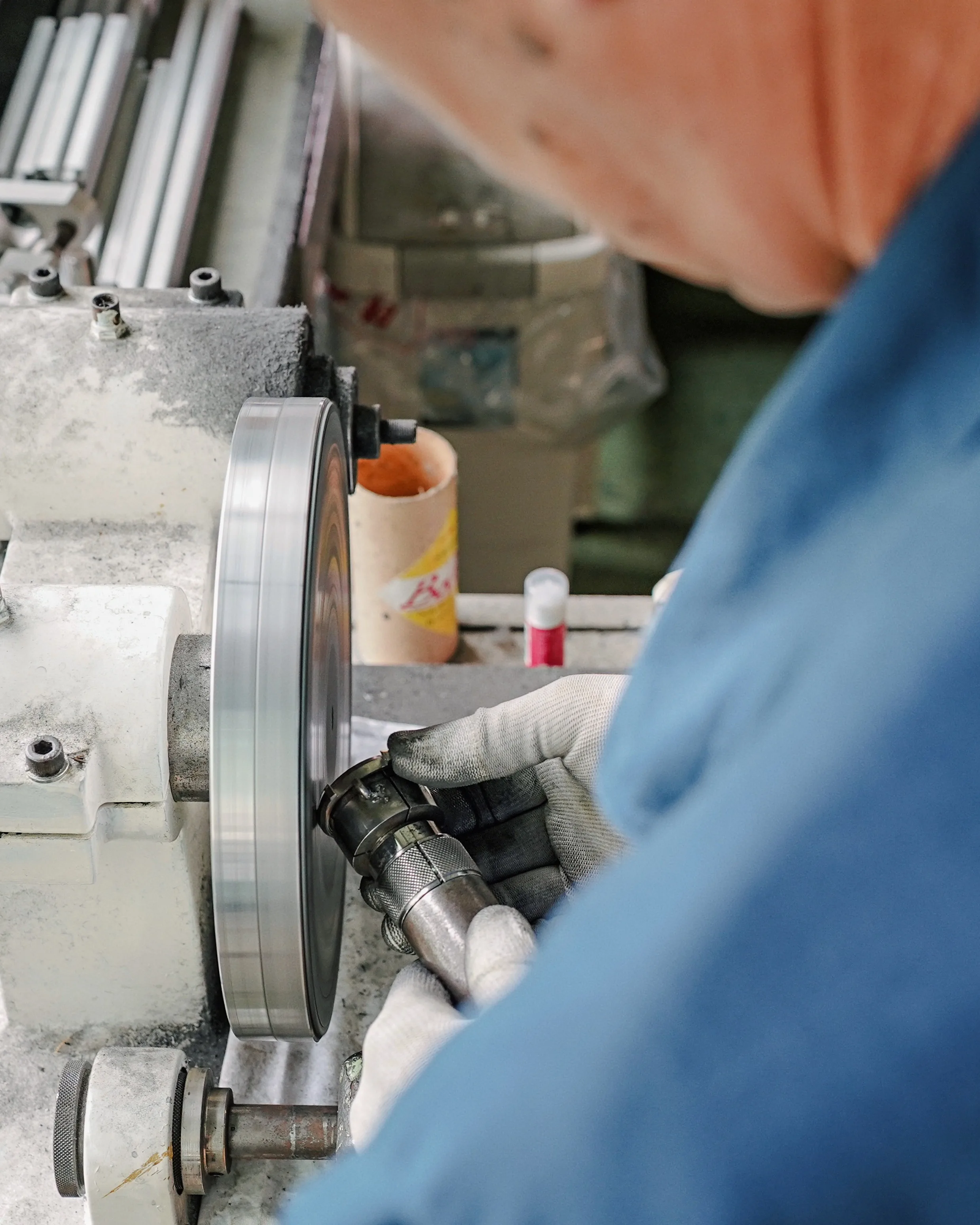
Perhaps the most unforgiving aspect of the process is maintaining the correct angle. A watch case, particularly one with the intricate geometry found on our Yoshino Feza, consists of numerous surfaces that meet along carefully considered transitions. The elongated, slender lugs are especially challenging, with their narrow polished facets running alongside sharply defined edges and contrasting satin surfaces. When one of these facets meets the flat face of the rotating disc, the polisher must ensure that the intended plane makes even contact with the polishing surface, guided by the steadiness of his own hands. A slight tilt in either direction could cause more material to be removed from one side than the other, gradually altering the shape of the facet or softening an edge that was meant to remain crisp. Polishing is, after all, an entirely subtractive process. Once too much metal has been removed, there is no simple way of putting it back. This is why a beautiful reflection alone is never enough. The real achievement lies in creating an exceptionally flat surface while faithfully preserving the geometry and proportions established during the original design of the case.
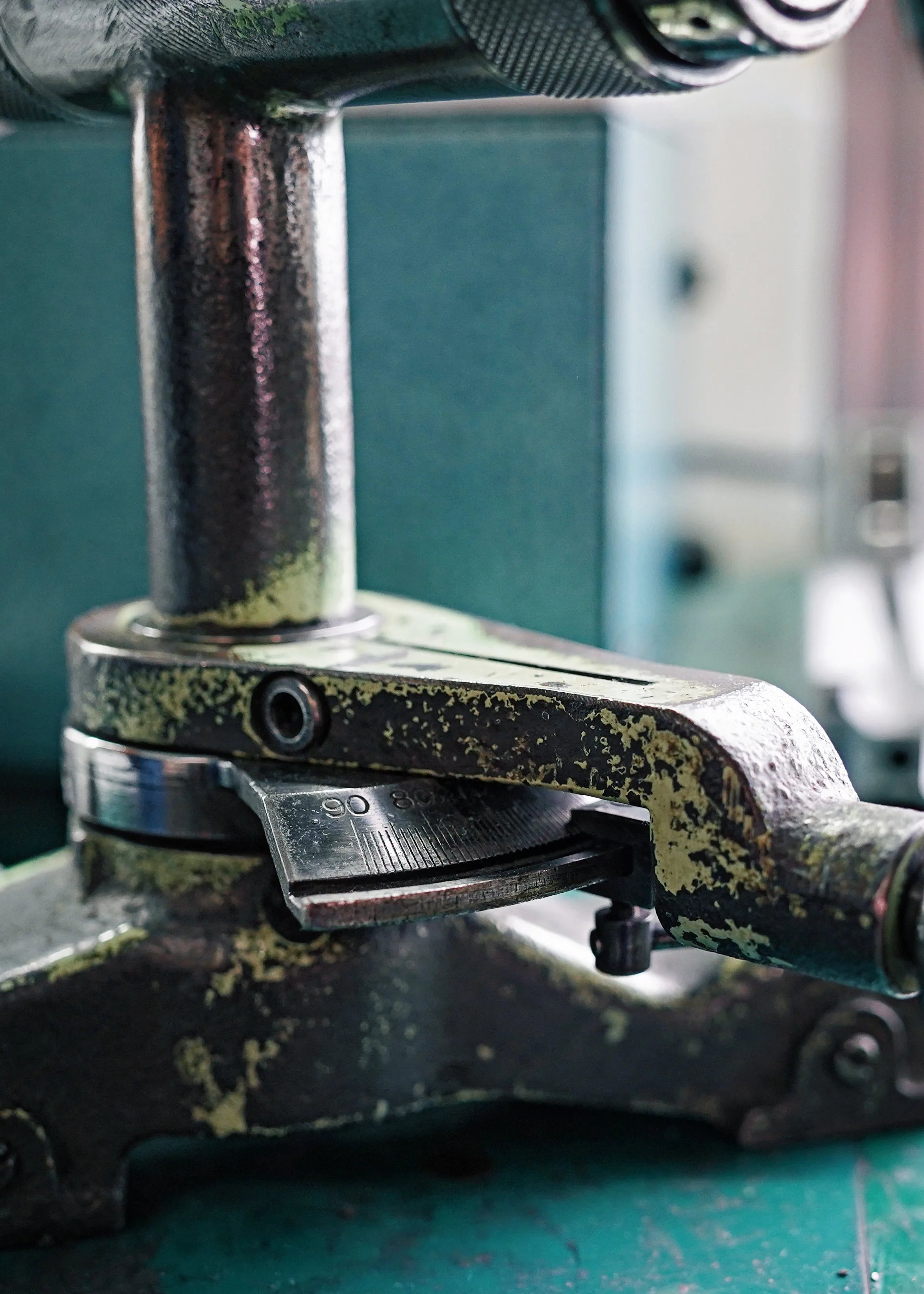
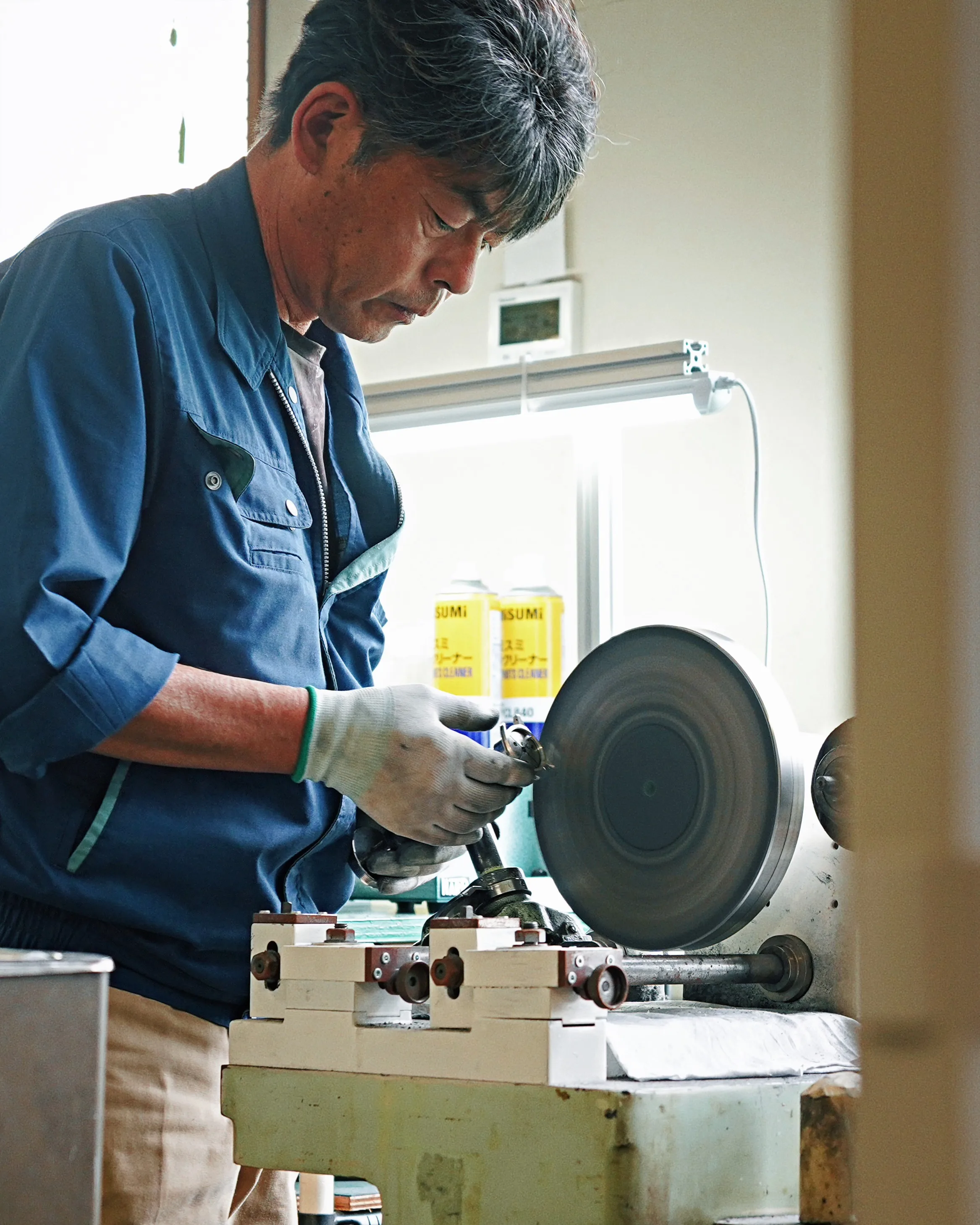
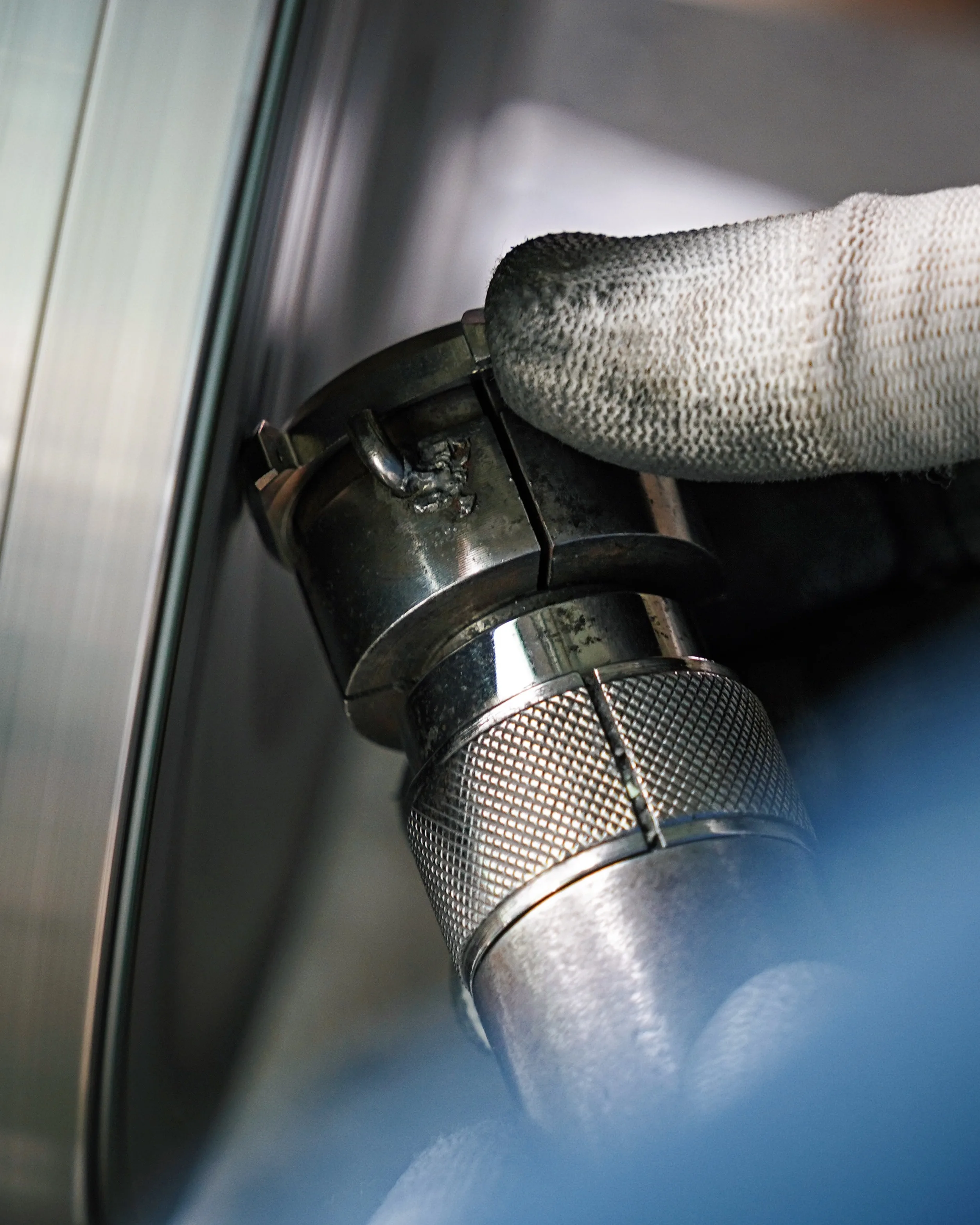
This brings us to another rather fascinating detail we encountered during our visit: the specially customised polishing jig developed for our Yoshino cases. At first, it might appear to be little more than a metal fixture designed to hold the watch case securely. Yet its purpose is considerably more important. The jig was made specifically to allow the sides of the Yoshino case to meet the rotating polishing disc at a carefully determined angle of 56.6 degrees, an orientation intended to achieve the desired flatness without compromising the case’s original geometry. It is a remarkably precise measurement, one that reflects just how closely the finishing process must be considered alongside the design of the watch itself. But even with such a carefully made fixture, a beautiful result is far from guaranteed. The jig provides the polisher with a stable and repeatable means of presenting the metal to the disc. How much pressure to apply, how to distribute that pressure and how long each surface should remain in contact remain matters of experience and personal judgement. Watching our master polisher at work, I came to appreciate that the jig was never intended as a shortcut to precision. Rather, it was a thoughtfully made tool that allowed his years of experience to be exercised with greater consistency.
Then comes the question of pressure and movement, two elements that are perhaps even harder to appreciate unless you are standing beside the machine. Too much pressure, or allowing one area to remain in contact for too long, can lead to uneven material removal. Too little, and the surface may not be refined sufficiently. Even the movement across the disc must be carefully considered, as different areas of a rotating surface travel at different speeds depending on their distance from its centre. What fascinated me most was how naturally our master polisher seemed to manage all of this. His hands moved with a remarkable sense of familiarity, making the smallest adjustments that were almost imperceptible to us. Every so often, he would lift the case away, examine how the light travelled across its surface, and return to the disc for another carefully judged pass. There was no sense of urgency, nor any attempt to rush towards a perfect reflection. Instead, it felt almost like an intimate tango between the craftsman and the metal, a quiet exchange in which every movement responded to what the previous one had revealed. There was a rhythm to his work that seemed entirely instinctive, yet behind that apparent ease lay an extraordinary amount of discipline and control.
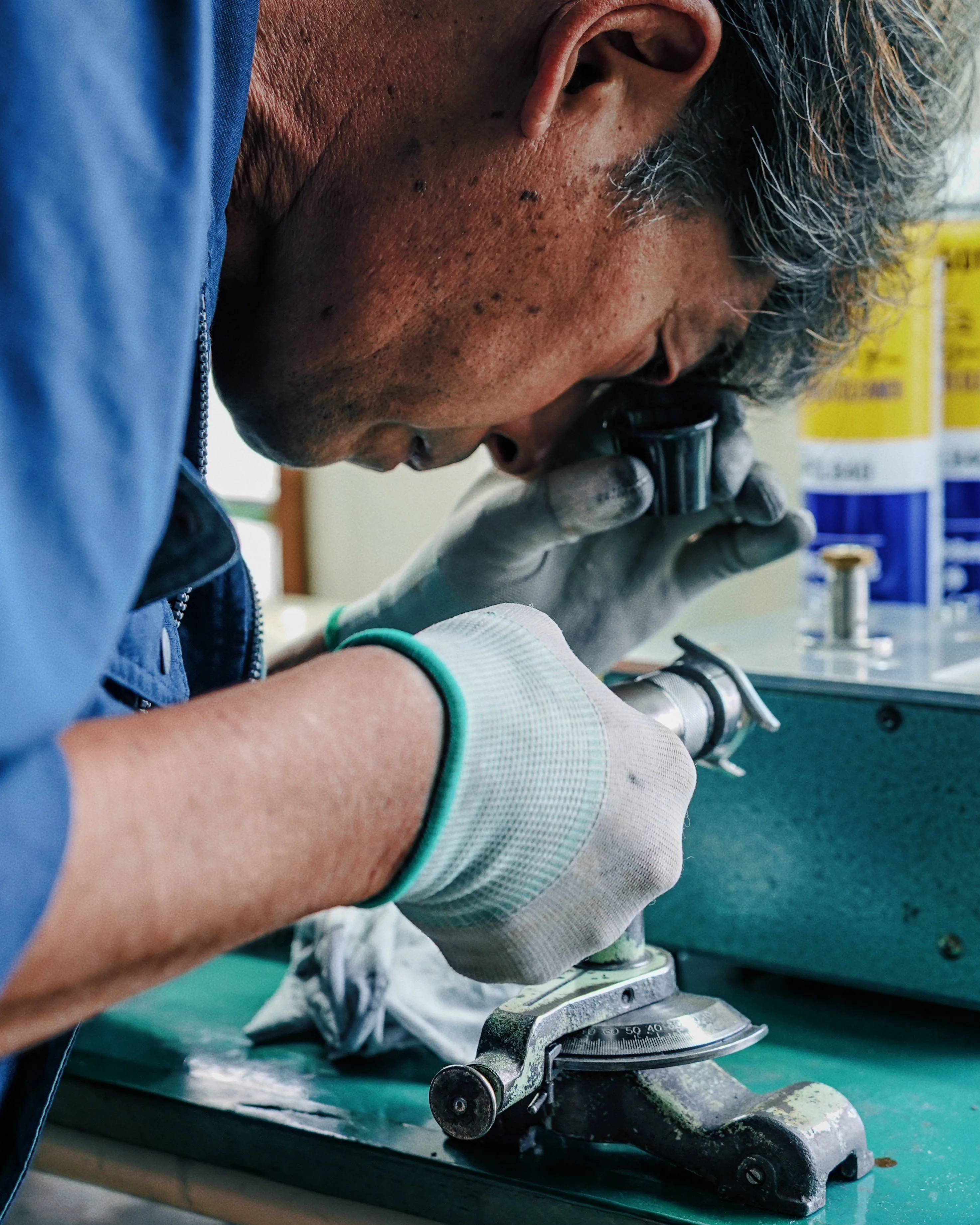
Our master polisher also shared something that made me appreciate the craft even more deeply. Becoming a trained polisher typically involves around three years of study and practical experience, according to him, but even completing that training does not necessarily mean one has mastered the art of Zaratsu. Beyond learning the fundamentals lies an entirely different level of understanding, one that can only be developed through years of working closely with the machinery and the materials themselves. He explained that much of his work ultimately comes down to personal judgement, knowing how far to take each surface while preserving the sharpness of its edges and the integrity of its flat planes. No two cases are necessarily approached in exactly the same way, and even with the assistance of a customised jig, the craftsman must continually interpret how the metal responds beneath his hands. It is this accumulated sensitivity, developed through countless hours of repetition, observation and the occasional mistake, that separates simply knowing how to operate a polishing machine from truly understanding the craft. I found this particularly meaningful because it reminded me that certain forms of knowledge cannot be acquired through instructions, measurements or technical drawings alone. They must be experienced, practised and gradually earned, often over the course of many years.
I think this was one of the experiences that left me with the greatest appreciation for the people behind such work. We often speak of precision in watchmaking through measurements, tolerances and increasingly sophisticated machinery, all of which are undoubtedly important. Yet standing there in Nagano, watching our Yoshino cases being polished, I was reminded that precision can also take a far more human form. It can be found in the steadiness of a craftsman’s hands, in his ability to recognise the slightest imperfection through a reflection, and perhaps most importantly, in the restraint to know when a surface has received just enough attention. The vintage Sallaz machine provides the rotating disc, and the customised jig offers a means of holding the case, but neither can independently produce the finish we admire. That final responsibility still belongs to the person standing before them. And as I would soon learn, even after the Zaratsu work is complete, there is still a considerable amount of finishing to be done before the case achieves its final brilliance.
Beyond the Mirror
Why Zaratsu Polishing Is Only Part of the Finishing Process
One of the more interesting things I came to understand during our visit to Nagano was that Zaratsu polishing, despite its reputation for producing some of the most beautiful mirror finishes in Japanese watchmaking, is only one part of a much longer finishing process. I had always associated the technique with those wonderfully clear, almost liquid-like reflections seen on finely polished Japanese watch cases. Yet our master polisher was keen to explain that, at least in the way our Yoshino cases are finished, Zaratsu serves a rather different purpose. Its primary role is to remove distortions from the metal surface and establish a beautifully flat foundation upon which the final finish can be developed. This was something I found particularly enlightening because, like many collectors, I had often judged the quality of a polished watch case simply by how brilliantly it reflected light. But a surface can be exceptionally shiny without being truly flat, just as a beautifully flat surface may not yet possess the brilliance we associate with a mirror finish. The two qualities are closely related, but they are not quite the same thing.
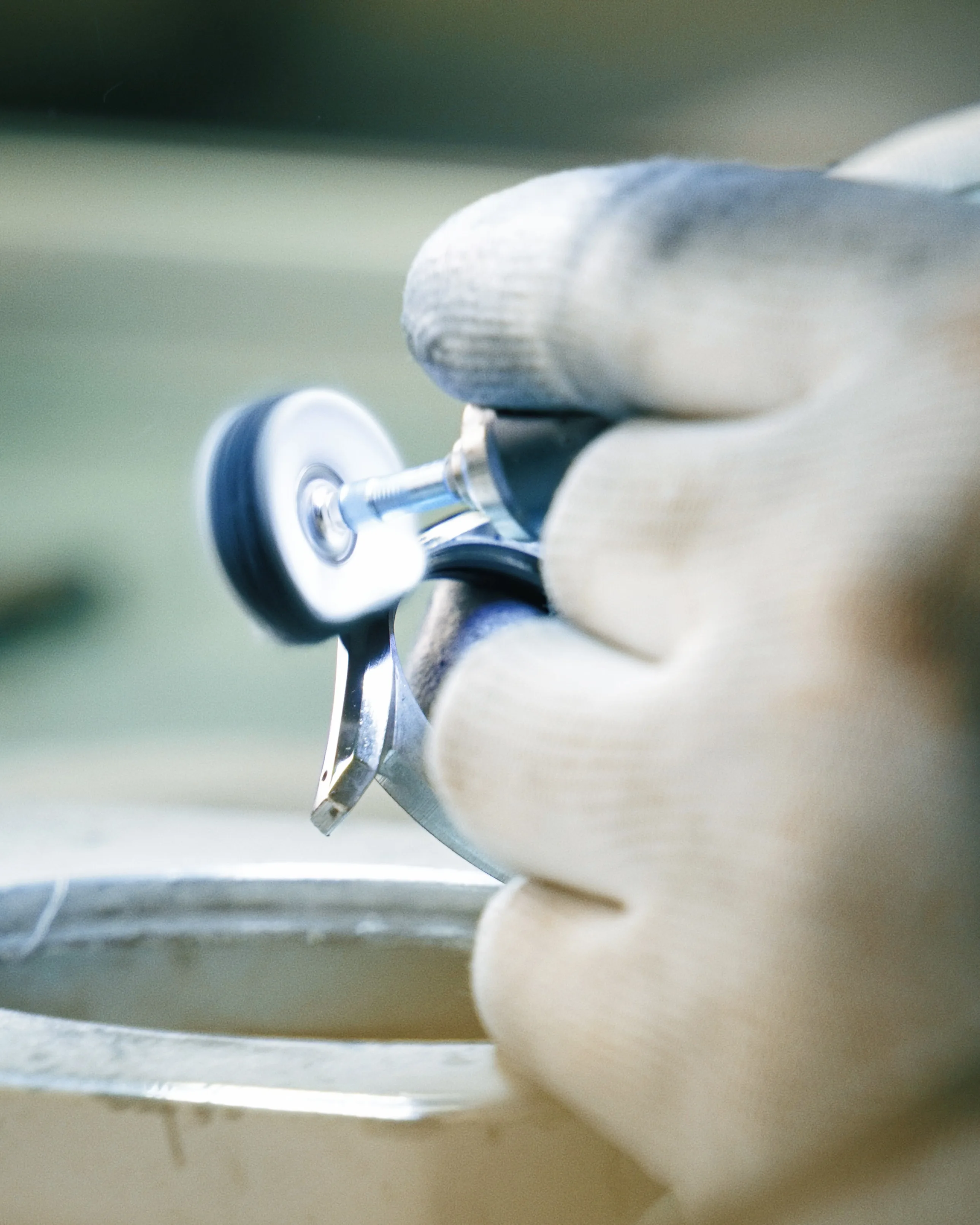
To better understand this distinction, it helps to look at the different finishing methods used in our atelier. The vintage Zaratsu machine works with a rigid, rotating polishing disc, allowing the craftsman to carefully refine the flat planes of the Yoshino case while maintaining their intended geometry. Interestingly, even the surfaces destined to receive a satin finish must first undergo this preparation. Only after a clean and satisfactory surface has been achieved does the craftsman move on to a more modern polishing machine, where 320 grit abrasive paper is used to create the fine satin texture along the sides of the case. The polished facets, meanwhile, undergo further refinement through conventional buffing. In our atelier, our master polisher carries out this final stage by hand using a portable buffing machine, carefully working the softer polishing wheel across the prepared surfaces to remove finer traces left behind by the earlier stages and gradually bring out their final lustre. Watching these different techniques in action was particularly fascinating because, although each involves working the metal, their purposes are quite distinct. One establishes the quality of the underlying surface, another introduces the desired texture, while the final buffing develops the brilliance that our eyes immediately recognise.
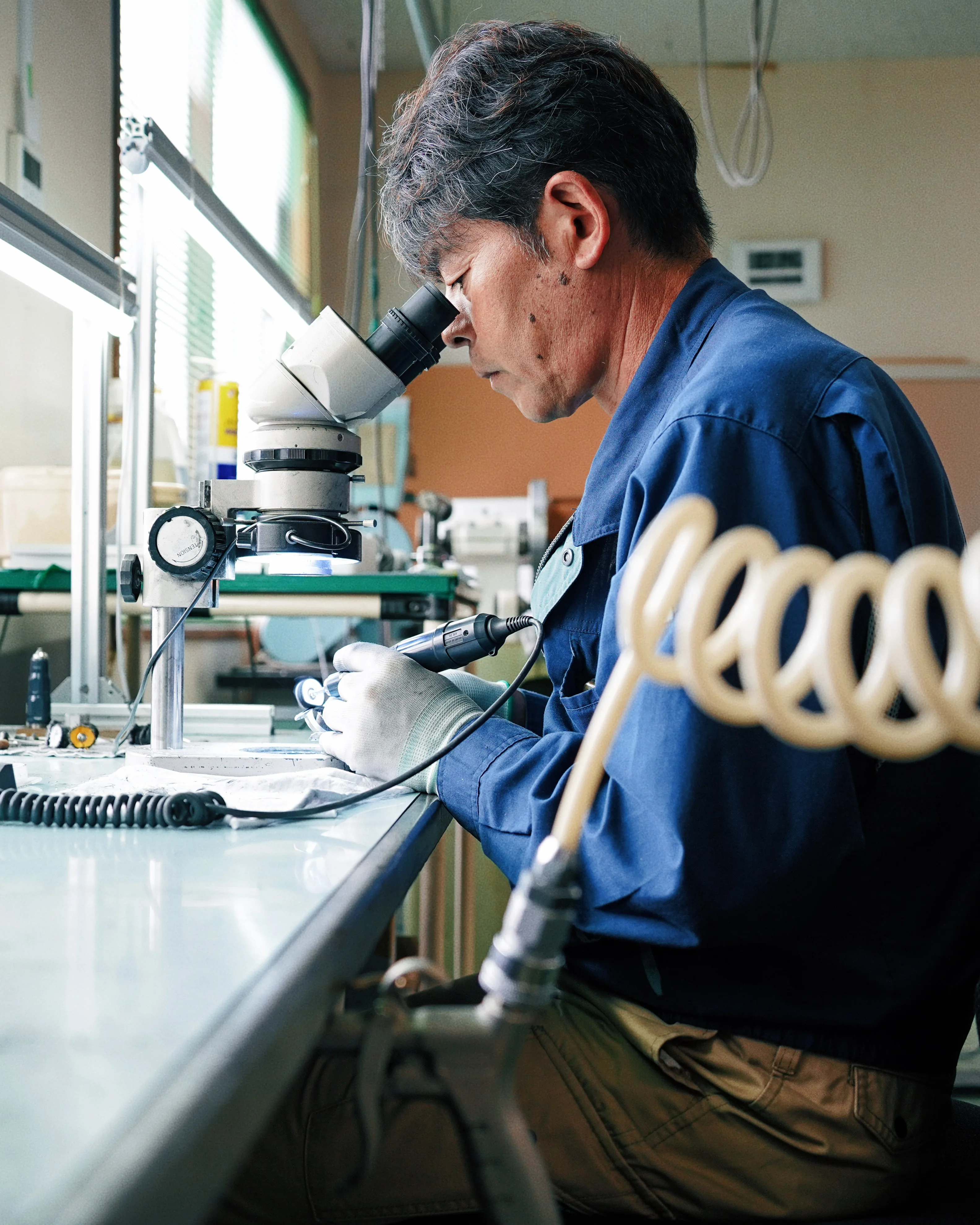
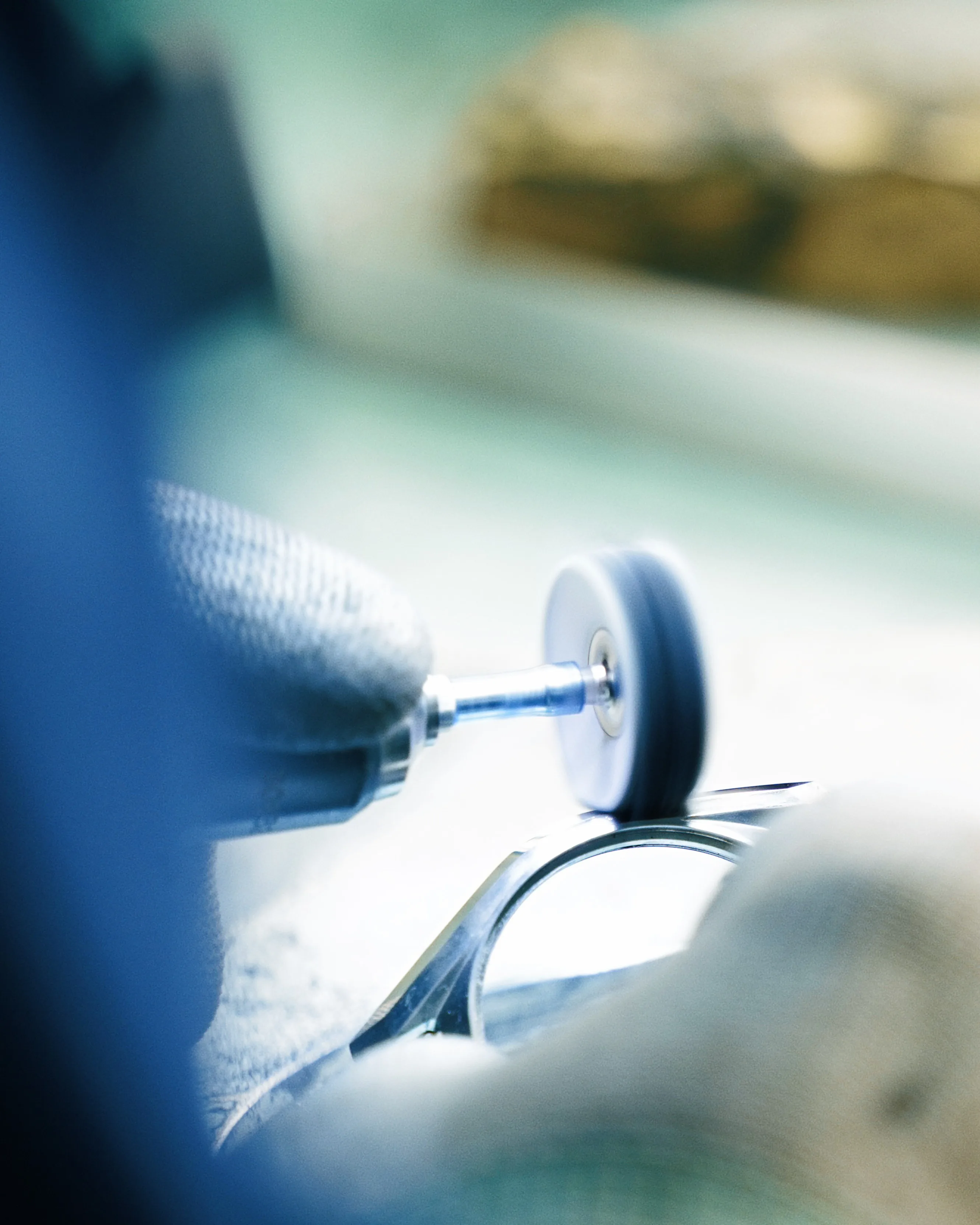
What my inquisitive self found equally intriguing was that the final buffing requires just as much care and restraint as the Zaratsu polishing that precedes it. Unlike the rigid disc, the softer buffing wheel naturally conforms to the contours of the metal, making it particularly effective at developing a smooth and brilliant surface. Yet that same characteristic introduces a different kind of challenge. If the craftsman applies too much pressure or continues polishing for longer than necessary, the wheel can gradually soften the sharp transitions between adjoining surfaces, rounding off the very edges that were so carefully preserved during the earlier stages. For the Yoshino Feza, with its elongated lugs, narrow polished facets and finely defined chamfers, this is something that must be approached with considerable sensitivity. Our master polisher therefore works with a careful understanding of how far each surface can be taken, knowing that the pursuit of greater brilliance should never come at the expense of the case’s original form. Watching him guide the portable buffing wheel across the metal reminded me of a painter working with a familiar brush. His movements appeared fluid and confident, almost effortless, yet each was carefully considered. It was rather humbling to realise that even at this final stage, when the case was already beginning to look beautifully finished, so much still depended upon the judgement of the person holding it.
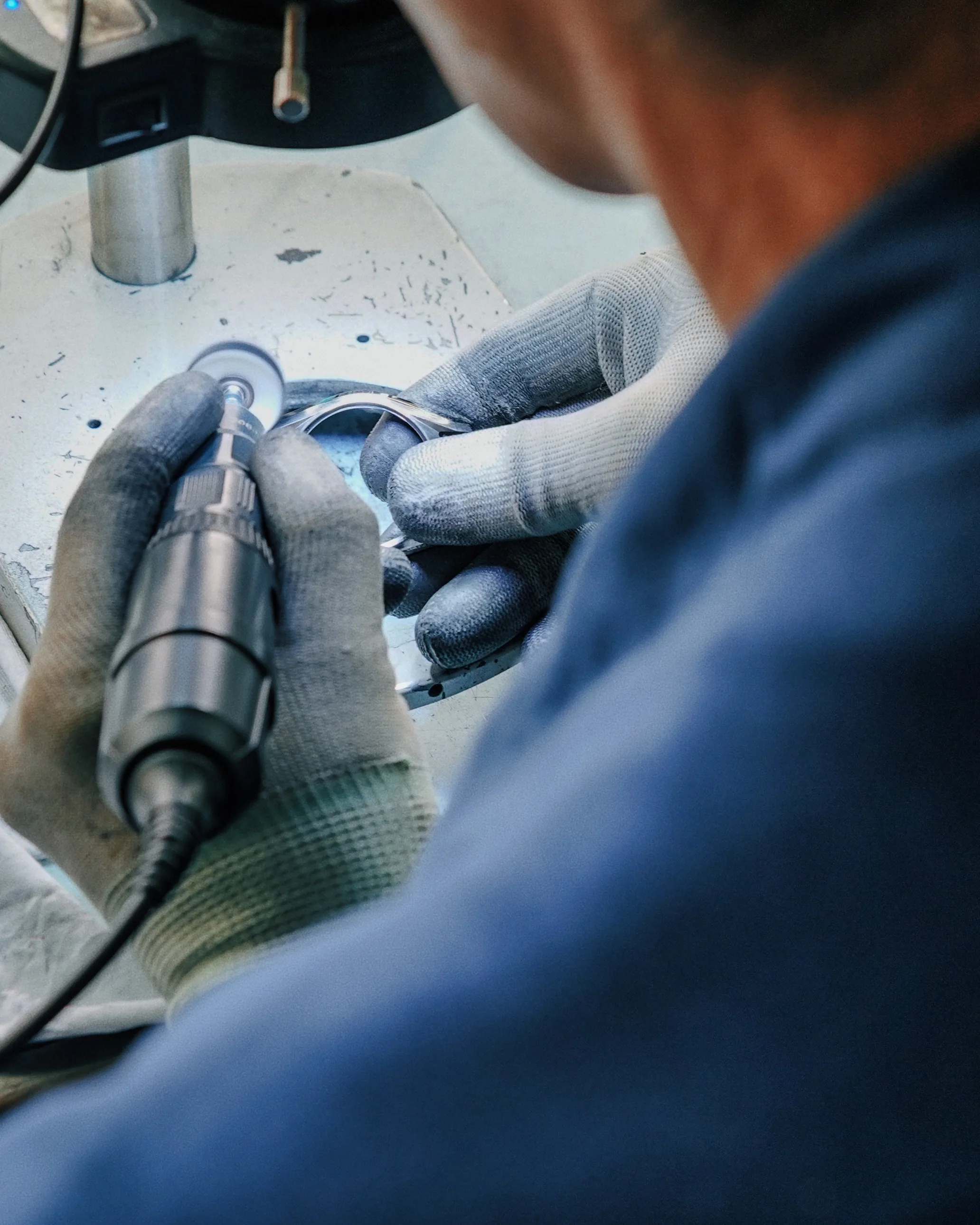
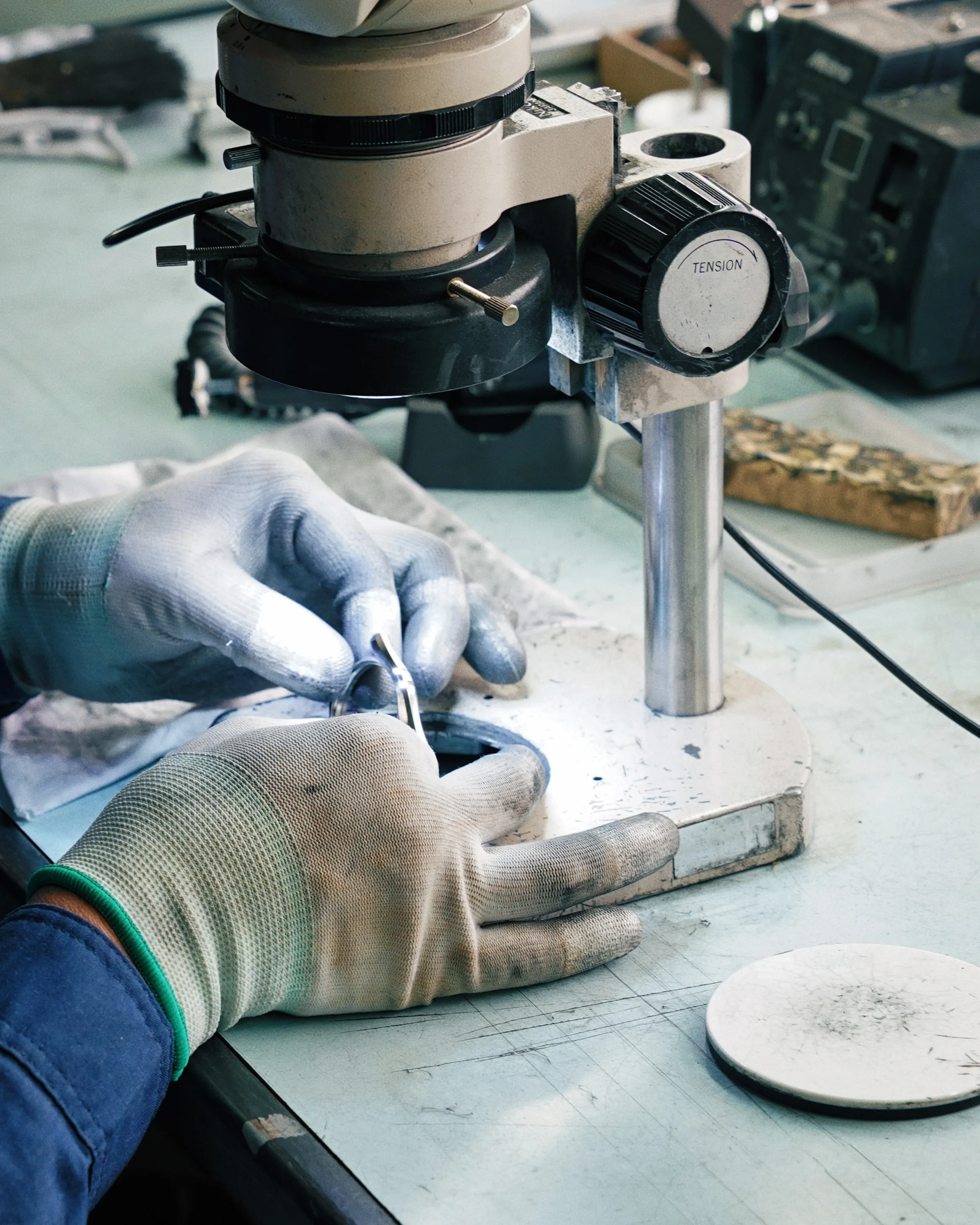
From the initial Zaratsu preparation to the final buffing, each Yoshino case requires more than twenty minutes of careful finishing work. That may not sound particularly extraordinary when expressed simply as a number, but having watched the process unfold, I began to understand just how much attention is concentrated into those minutes. Every stage builds upon the one before it, and the quality of the final finish depends greatly on the care taken during the earliest preparations. A beautiful reflection is therefore not merely the result of polishing a surface until it shines, but of preserving its geometry throughout a succession of carefully controlled processes. The way light travels uninterrupted across a flat facet, the crisp line separating a polished surface from a satin-finished side, or the subtle changes in reflection as the case moves upon the wrist are all small details that can easily be taken for granted. Yet each tells a story of the work that went into creating it.
Perhaps what stayed with me most was the realisation that the beauty of a finely finished watch case is not simply found in how brightly it shines, but in how faithfully it preserves the intentions of the person who designed it. Zaratsu polishing establishes the foundation, the subsequent finishing stages bring out the desired character, and the craftsman’s judgement holds everything together. None of these processes exists entirely on its own. They form a continuous sequence in which each step must respect the work that came before it. Modern manufacturing has undoubtedly achieved remarkable levels of precision and consistency, but there remains something deeply compelling about watching an experienced craftsman make these decisions through his own hands. The finished watch may reveal only a quiet reflection of light, yet behind it lies a much longer story of patience, experience and personal dedication. For me, this is part of what makes collecting mechanical watches so meaningful. We are not simply drawn to the objects themselves, but also to the people, traditions and stories that give them their character.
A Craft Worth Passing On
On the Uncertain Future of Traditional Japanese Polishing
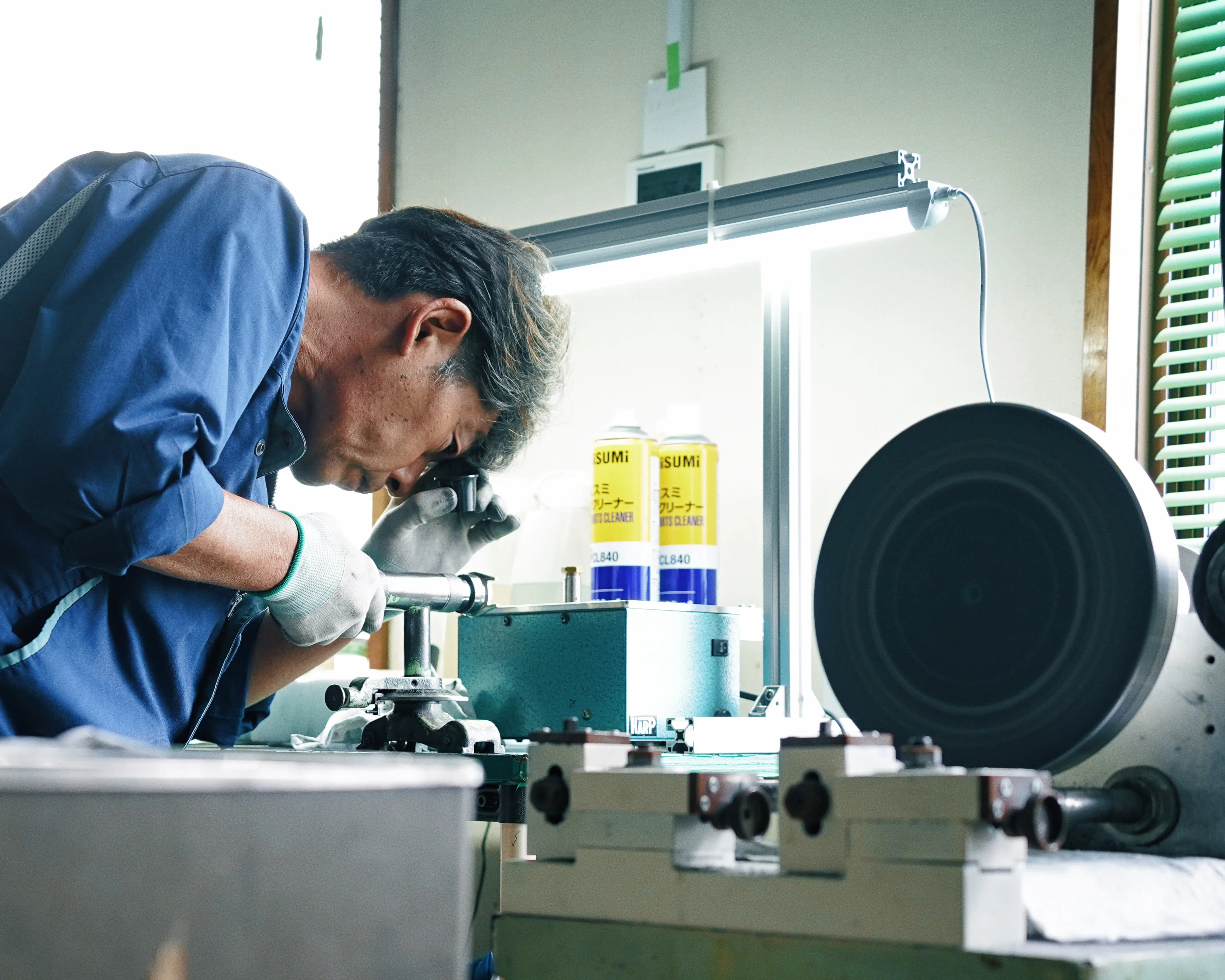
Throughout our time in Nagano, I found myself reflecting on something that extends well beyond watchmaking. Japan has long been a place where traditional crafts are deeply appreciated, from the centuries-old practice of indigo dyeing to the delicate art of making washi paper by hand. These are crafts that have survived through generations, often sustained by small workshops and individuals who have devoted much of their lives to mastering a particular technique. Yet for all the admiration we have for such traditions, many face an increasingly uncertain future. The knowledge is still there, as are the tools and materials, but finding people willing to dedicate years of their lives to learning them has become a growing concern. Watching our master polisher work with that ageing emerald green machine, I could not help wondering whether this particular form of Zaratsu polishing might one day find itself in a similar position. Not because the technique has lost its relevance, but because the human knowledge required to practise it is becoming increasingly difficult to sustain.
Out of curiosity, I asked our master polisher why nobody had considered developing a completely new Zaratsu machine, something better suited to contemporary manufacturing, perhaps easier to operate, more efficient and ultimately more approachable for a younger generation of craftsmen. His answer was rather revealing. The challenge, he explained rather matter-of-factly, was never simply about building a better machine. Even with modern equipment, the demanding nature of the technique would remain. Learning to control the relationship between the rotating disc and the watch case requires considerable time, patience and practical experience, and becoming a trained polisher does not necessarily mean one will develop the judgement needed to execute the work beautifully. He spoke about how difficult it has become to find people capable of handling this kind of polishing, even among established Japanese watchmakers and the relatively small number of specialist case-finishing workshops. There are also practical limitations to the technique itself. As contemporary watch cases become increasingly elaborate in their shapes and construction, certain surfaces simply cannot be presented evenly to a flat polishing disc, while others may be too difficult to reach without compromising the surrounding geometry. In such circumstances, the method is not always suitable, regardless of how experienced the craftsman may be. It made me realise that modernising Zaratsu is not quite as straightforward as replacing an old machine with a newer one.
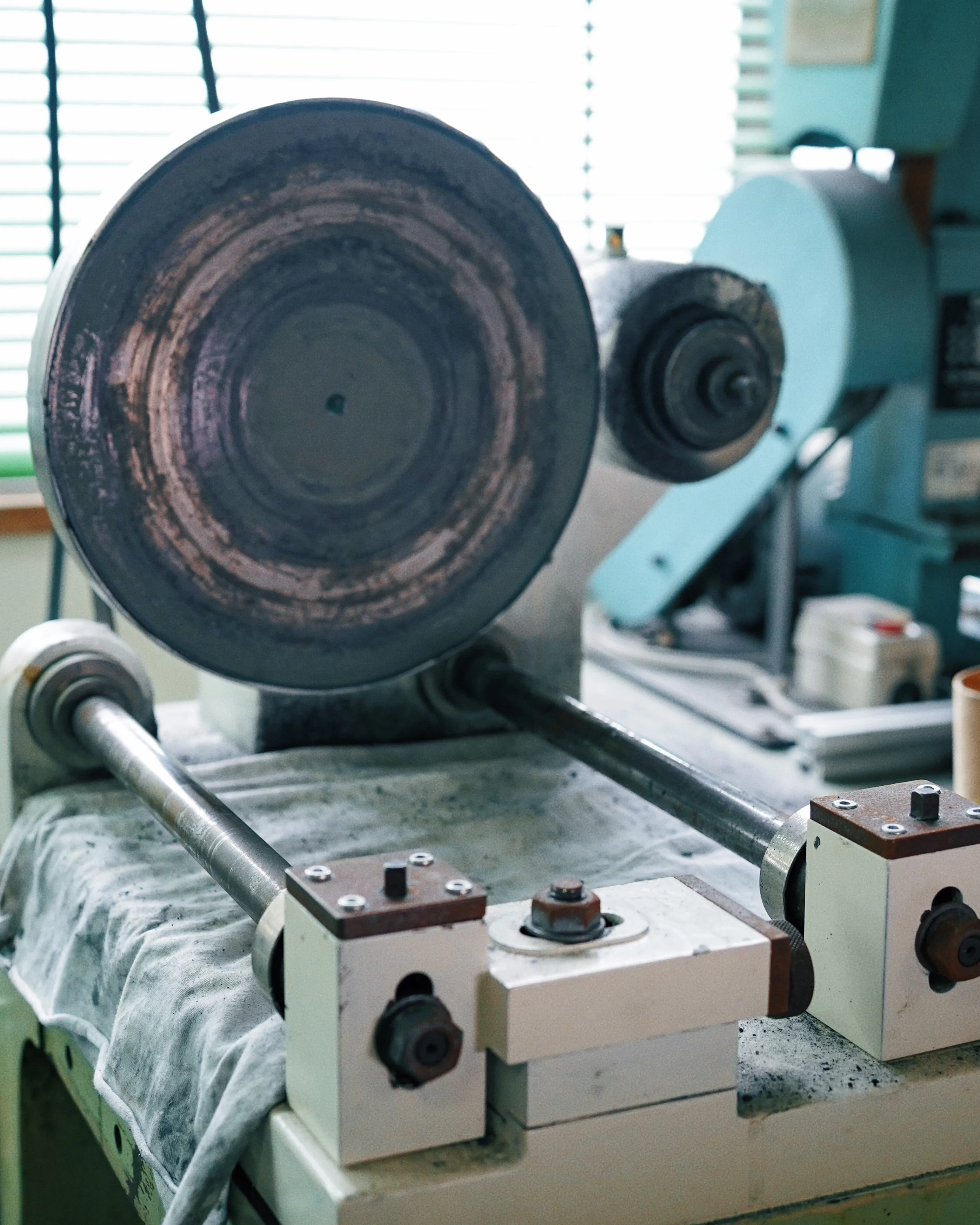
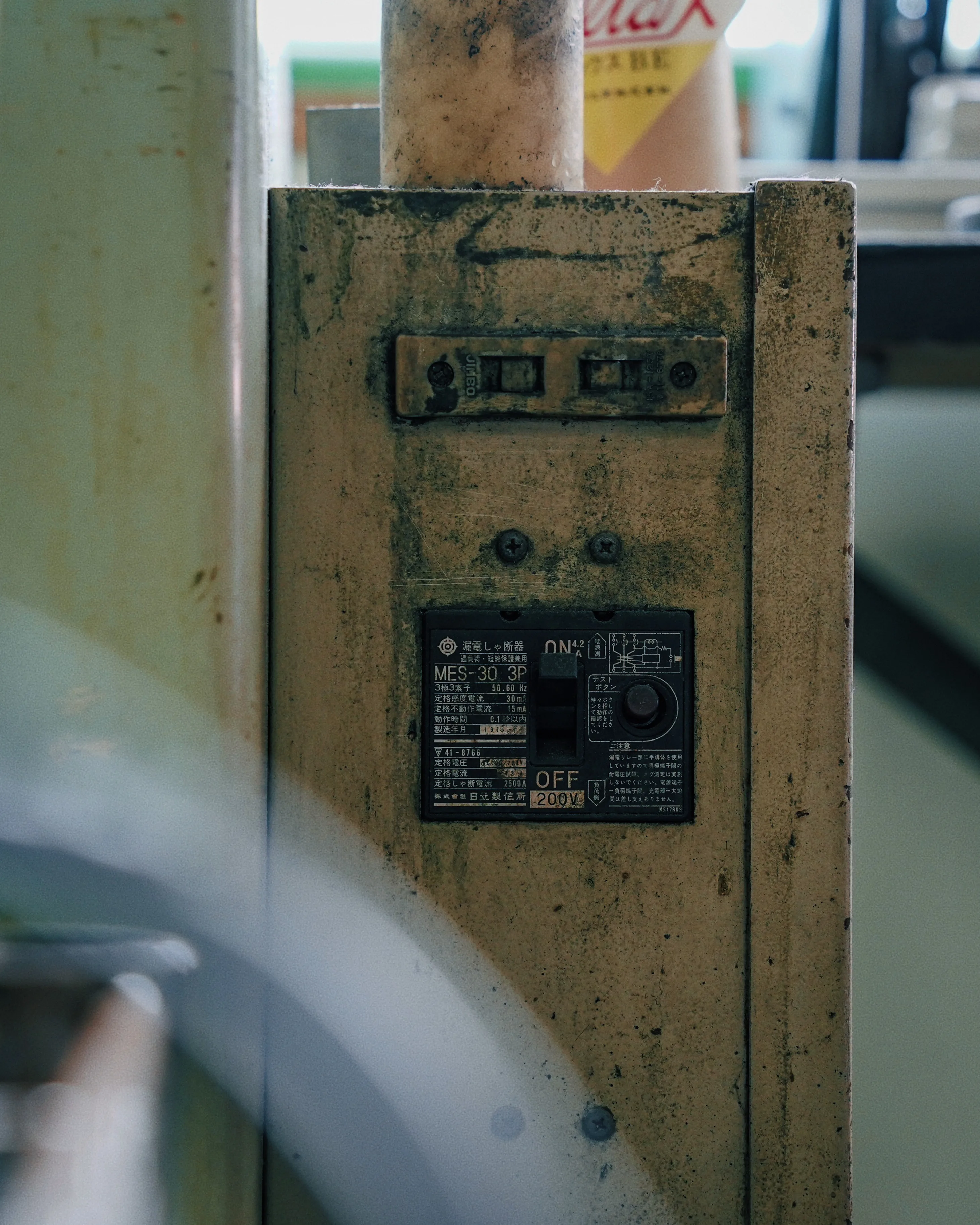
Perhaps the more difficult question is whether the next generation would be willing to devote the necessary years to mastering such a demanding process. Our master polisher explained that even after completing the usual years of training, there is no guarantee that someone will eventually develop the sensitivity and judgement required to produce an exceptional finish. Much of that ability comes from repetition, from understanding how different surfaces respond to pressure, and from gradually learning to recognise imperfections that might be almost invisible to an untrained eye. It is a rather unforgiving way of learning, particularly in an age where manufacturing increasingly values efficiency, consistency and the ability to scale production. I began to understand why such a specialised craft might struggle to attract new practitioners. The investment of time is considerable, the learning curve is steep, and the rewards are not necessarily immediate. Yet the very qualities that make the process difficult to master are also what make its finest results so remarkable. There is something deeply personal about a craft in which two people can use similar equipment and follow the same principles, yet arrive at noticeably different results because of the experience and judgement they bring to their work.
What stayed with me most, however, was something our master polisher shared rather discreetly towards the end of our conversation. Despite the extraordinary skill we had just witnessed, he was remarkably humble about his own abilities. He told us that he did not consider himself among the very best practitioners of the craft. In his view, some of the finest polishers still working today are already in their seventies, craftsmen who have spent the better part of their lives developing an understanding of these machines that few others possess. He spoke of their desire to pass on their knowledge while they still can, and of how difficult it has become to find younger people willing to take up the work. I found that particularly moving. Here was someone whose work I had watched with such admiration, yet he was speaking with even greater respect for the generation that came before him. It reminded me that traditional craftsmanship is not simply a collection of techniques that can be preserved in manuals or demonstrated through photographs. So much of it lives in the hands, instincts and accumulated experiences of the people who practise it. And when those people are gone, there is a very real possibility that something irreplaceable disappears with them.
I left the atelier with a deeper appreciation for what it means to keep a traditional craft alive. It is easy for us, as collectors and enthusiasts, to admire the finished objects and celebrate the beauty of handmade things. But behind every craft is a much less visible struggle to preserve the knowledge that makes those objects possible. The old machines can be maintained, restored or perhaps even reproduced, but finding someone willing to spend years learning how to use them is an entirely different challenge. I suppose this is one of the reasons I have always felt such a strong attachment to Japanese craftsmanship. There is a certain sincerity in the way so many artisans approach their work, not necessarily with the ambition of producing something extraordinary, but with the quiet determination to do something properly, day after day.
Having witnessed even a small part of that dedication through the making of our Yoshino Feza, I feel an even greater responsibility to appreciate the people behind these processes. Perhaps we cannot preserve every tradition simply by admiring it. But by continuing to work with these craftsmen, learning from them and sharing their stories, I hope we can play some small part in ensuring that their knowledge remains meaningful to the generations that follow. For Hitori, this experience has been about far more than introducing a particular polishing technique into our watches. It has reminded us of the value of making things with intention, of respecting the people whose knowledge makes our ideas possible, and of recognising that some of the most meaningful qualities in an object cannot be measured through specifications alone. When I look at the finished Yoshino Feza today, I see more than its carefully polished surfaces. I remember the old emerald green machine, the sound of its belt coming to life, and the quiet concentration of the craftsman standing before it. These are the things that stay with me, long after the reflections themselves have faded from view.